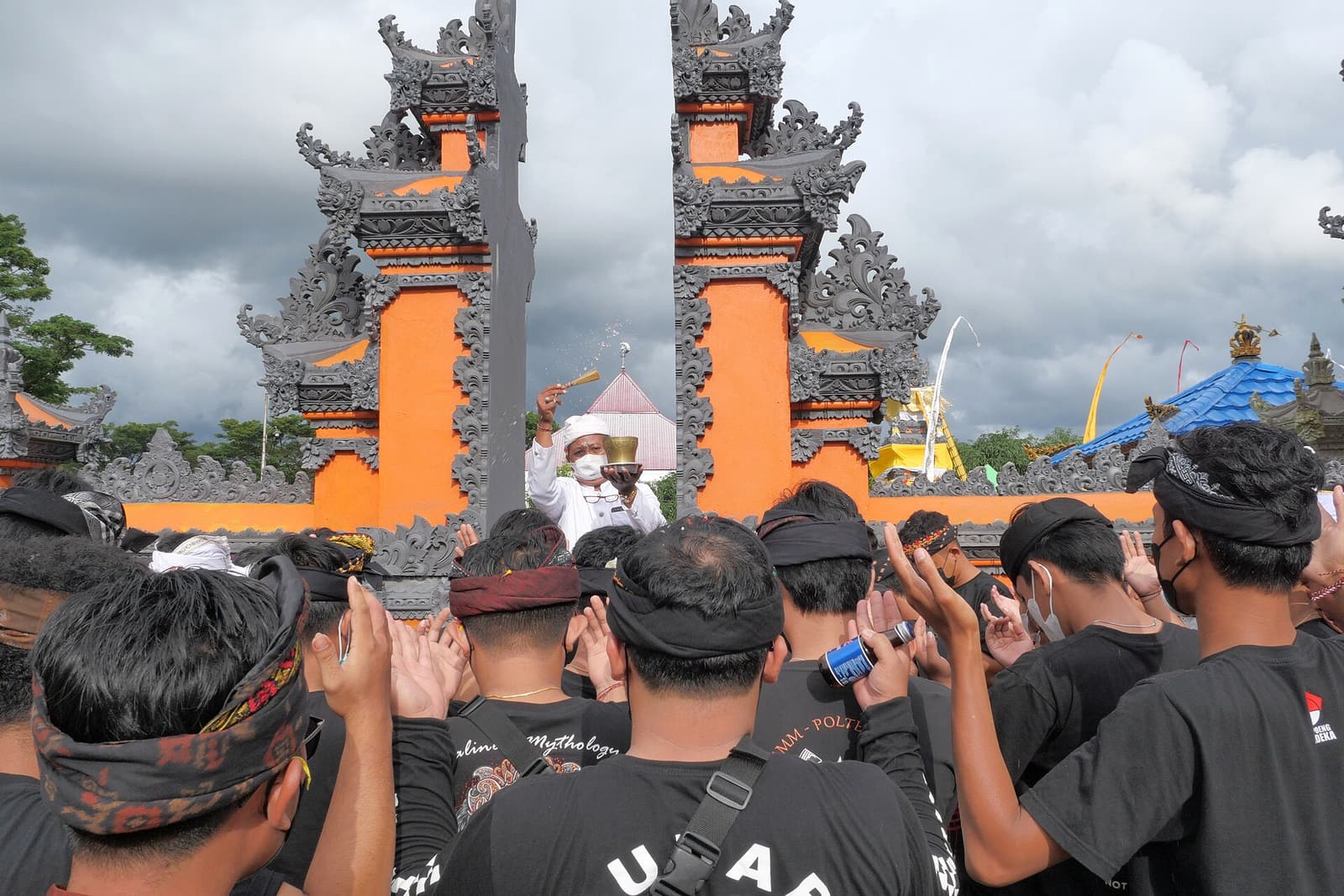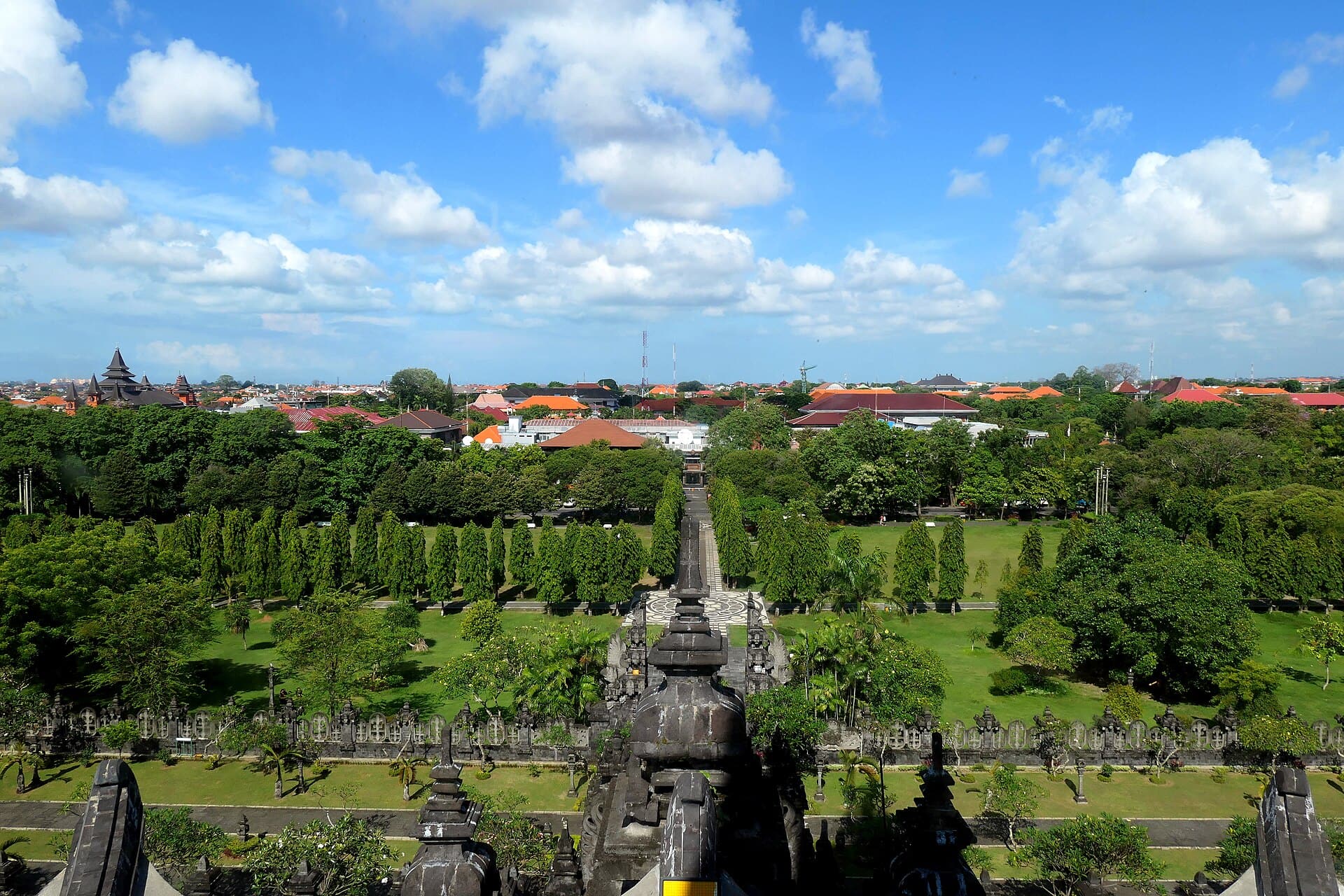
Denpasar is the capital of the province of Bali and by far its largest city, home to more than 700,000 people. It sits in the south of the island, between the beaches of Sanur to the east and the Kuta–Seminyak strip to the south-west. Most visitors pass straight through. Those who stop find a busy, friendly, thoroughly Balinese city with almost no tourist gloss.
A short history
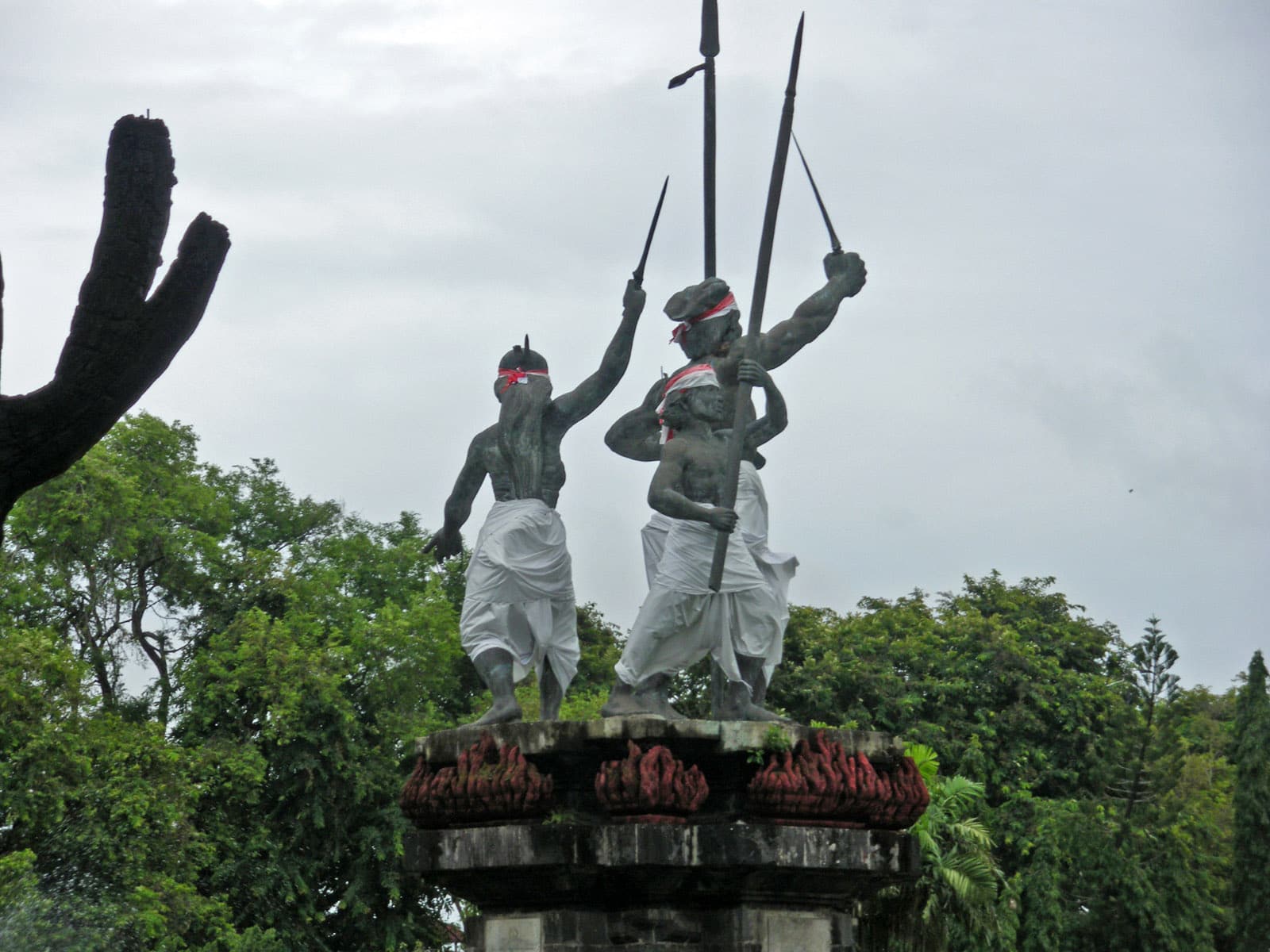
The name comes from den (north) and pasar (market): the town grew up beside the market of the kingdom of Badung, whose palaces stood where the city centre is now. In September 1906 Dutch forces landed at Sanur and marched on the capital. On the 20th, the raja of Badung, his family and hundreds of his court walked out to meet them and died in a puputan — a ritual fight to the death. Puputan Square marks the site.
Under colonial rule the town became the administrative and trading centre of south Bali; the Bali Hotel opened in 1927 and the Bali Museum in 1932. After Indonesian independence, Denpasar replaced Singaraja as the capital of Bali in 1958. The government quarter was later laid out in Renon, around what is now the Bajra Sandhi monument, and the city spread to absorb Sanur and the villages around it.
What to see
The essentials are close together. Start with these four, then explore the full list on our things to do page.
 Old town & the markets
Badung Market & Kumbasari
Bali’s biggest traditional market, on both banks of the river
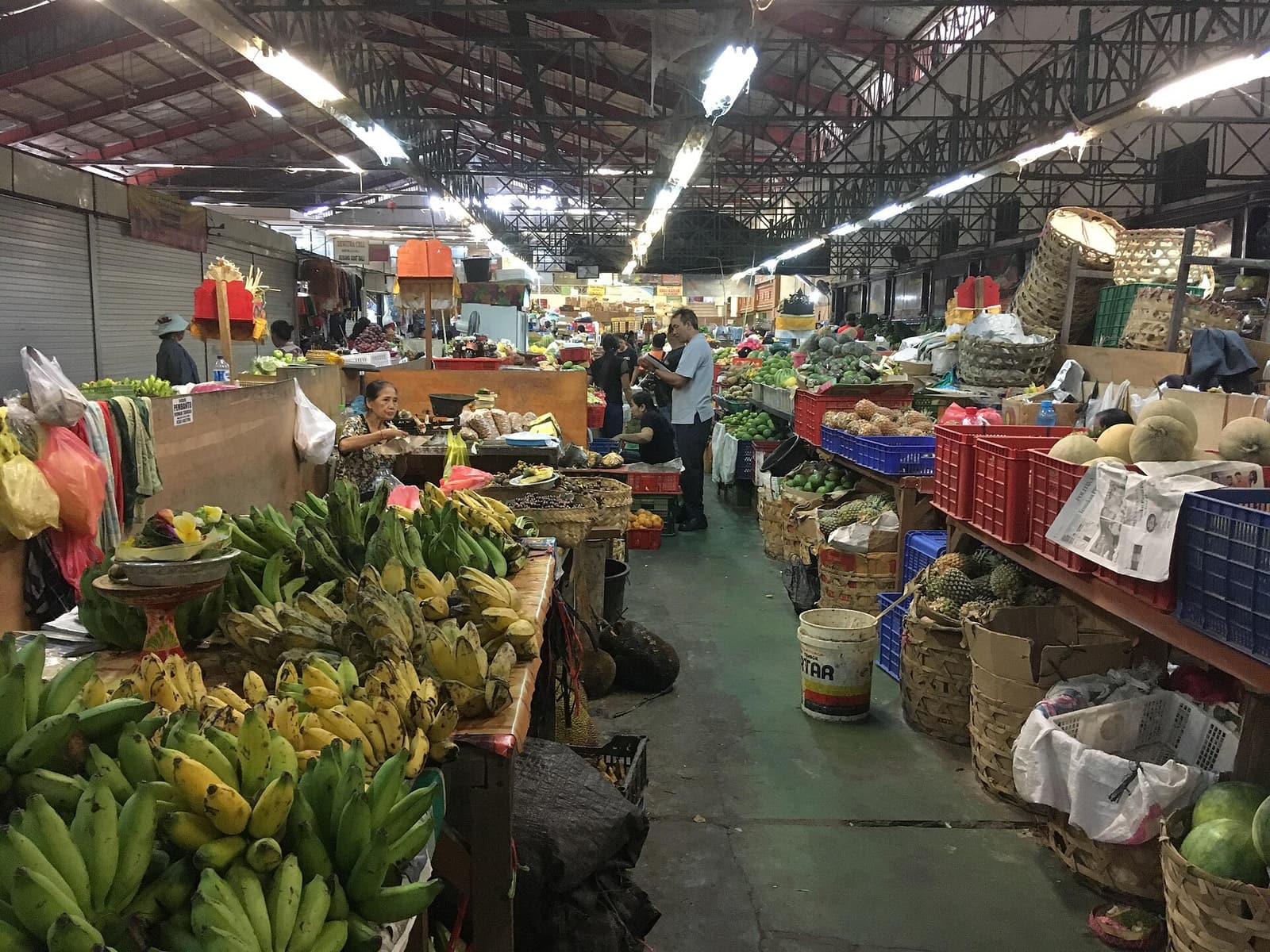
Pasar Badung is where Denpasar shops: four floors of fruit, spices, offerings, meat, fish and ceremonial goods on the east bank of the Badung River, with the Kumbasari art market facing it across the water. It trades around the clock and is at its liveliest at dawn and again after dark.
 Old town & the markets
Puputan Badung Square
The green heart of the city, and the place it remembers 1906
A big, shady lawn in the middle of Denpasar where the court of Badung walked out to meet Dutch guns on 20 September 1906 in a ritual fight to the death — the puputan. Today families fly kites and eat snacks under the monument, with the Bali Museum and Pura Jagatnatha along its eastern side.
 Old town & the markets
Bali Museum
Palace-and-temple architecture with the island’s story inside
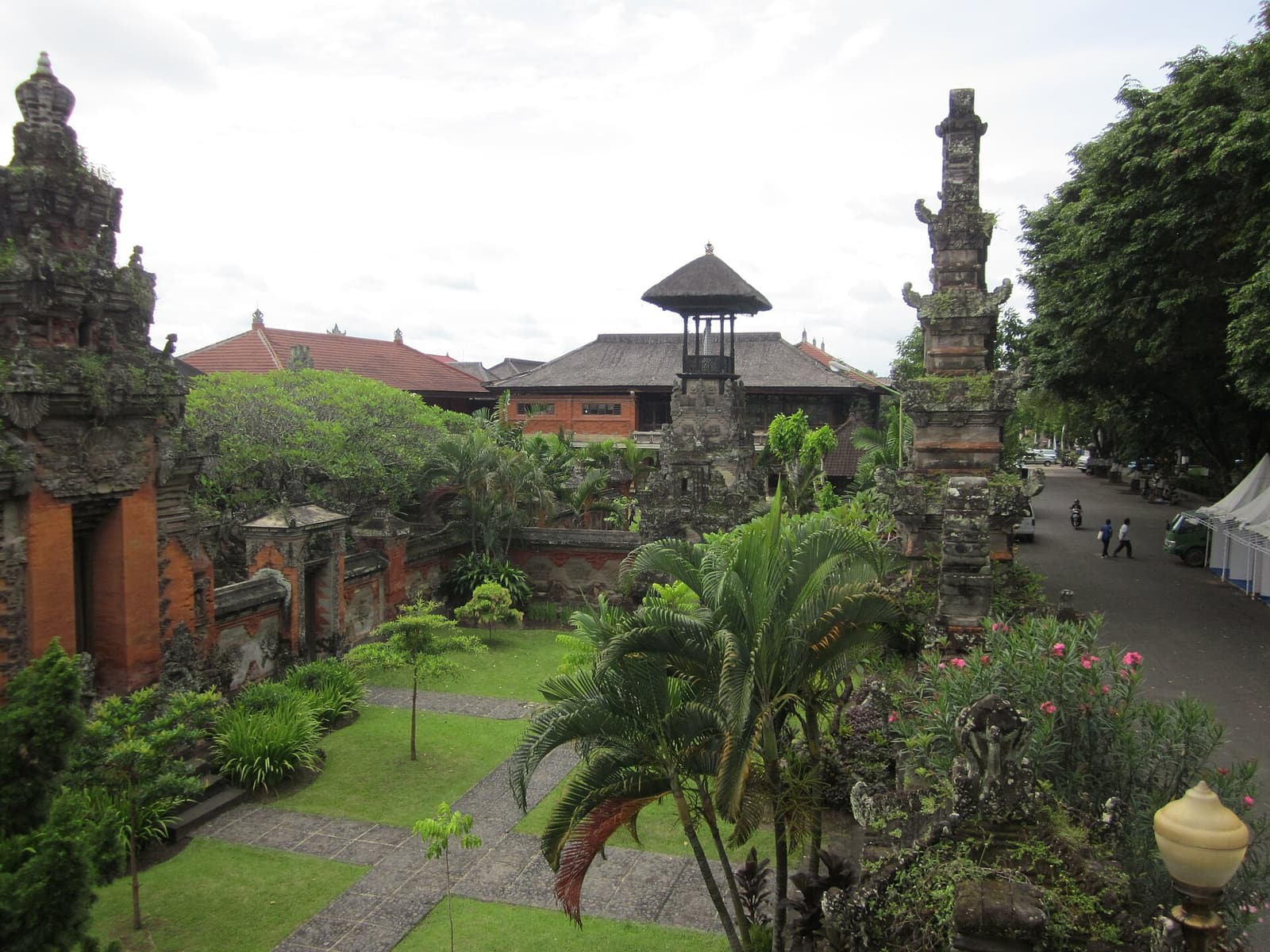
Bali’s oldest museum, opened in 1932 beside Puputan Square. Its pavilions are built in the palace styles of different Balinese kingdoms around gateways and courtyards, and hold prehistoric finds, ritual objects, masks, textiles and dance costumes. The architecture is as much the attraction as the collection.
 Renon & east Denpasar
Bajra Sandhi Monument
The monument to the struggle of the Balinese people, in Renon
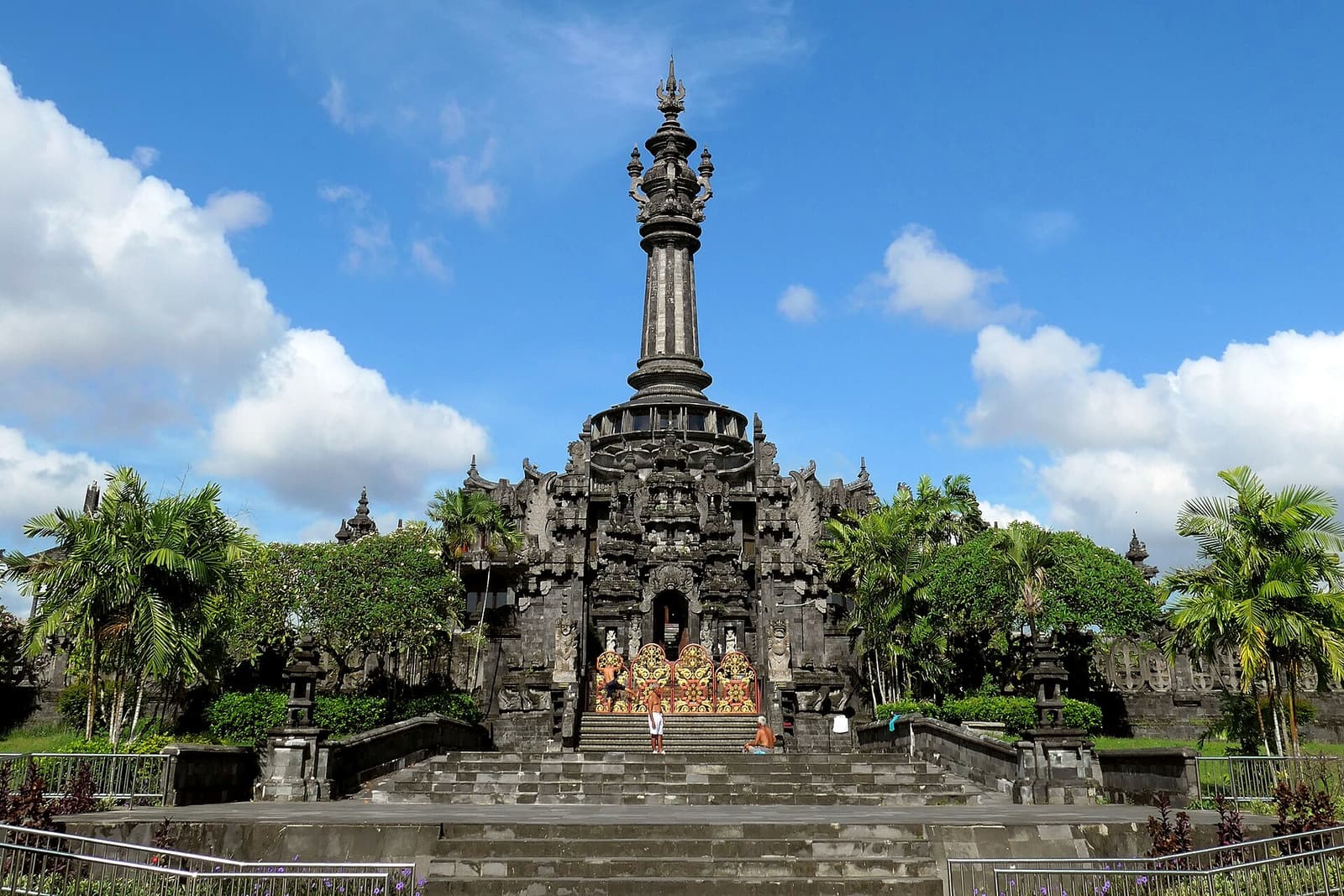
A huge stone monument shaped like a priest’s bell, standing in the middle of Renon’s Niti Mandala park. Inside, dioramas tell the story of Bali from prehistory to independence, and a spiral stair climbs to a gallery with views over the city. The lawns around it are Denpasar’s favourite jogging ground.
What to eat
Denpasar is the best place in Bali to eat Balinese food as locals do: at a warung (a simple family restaurant) or a market stall, for very little money. The dishes to look for:
- Babi guling — spit-roast pig stuffed with turmeric, lemongrass, chilli and other spices, served with rice, crackling, sausage and lawar. The island’s signature dish; sold from morning until it runs out, usually by early afternoon.
- Ayam betutu — chicken (or duck, bebek betutu) rubbed with a fiery spice paste and cooked slowly until it falls apart. Renon has several well-known betutu restaurants.
- Nasi campur Bali — rice with a little of everything: shredded chicken, sate lilit, vegetables, egg, peanuts, sambal. Every warung has its own version.
- Sate lilit — minced fish, chicken or pork mixed with coconut and spices and pressed around a lemongrass stalk or bamboo skewer.
- Lawar — finely chopped vegetables, grated coconut and minced meat with spices; some versions include fresh blood, so ask if that matters to you.
- Nasi jinggo — a fist-sized parcel of rice with spicy accompaniments in a banana leaf, sold from roadside stalls in the evening for a few thousand rupiah.
- Jaje Bali — colourful sweets of rice flour, coconut and palm sugar, sold at every market.
- Seafood in Sanur — grilled fish on the beach, and a long-established fish-soup warung near the harbour that has fed locals for generations.
The easiest introductions are the night markets and a guided food walk. Much Balinese cooking uses pork; Muslim travellers will find plenty of halal Javanese and Padang restaurants, clearly signed. Vegetarians should ask for tanpa daging (without meat) and check for shrimp paste (terasi).
Festivals and the Balinese calendar
Bali runs on two calendars besides the Western one, and something is being celebrated somewhere in Denpasar almost every day. The big ones for visitors are Nyepi with its ogoh-ogoh parade (usually March), the month-long Bali Arts Festival (mid-June to mid-July), and Galungan and Kuningan, which come round every 210 days and fill the streets with tall bamboo penjor. Our when to visit page explains each one and how it affects travel.
Temple etiquette and local customs
- Wear a sarong and a sash to enter any temple, with shoulders covered. Many temples lend or rent them.
- Do not step on the small offerings (canang sari) placed on pavements and doorsteps — walk around them.
- In a temple, do not stand higher than the priest or walk in front of people who are praying; ask before photographing ceremonies.
- Use your right hand to give and receive, and do not touch people on the head.
- Dress modestly away from the beach. Swimwear is for the sand, not the street.
- If you meet a procession on the road, wait. It will pass in a few minutes, and it is worth watching.
Money and costs
The currency is the Indonesian rupiah (IDR). ATMs are plentiful in Denpasar and Sanur; use machines attached to bank branches where you can, and cover the keypad. Cards are accepted in hotels, malls and larger restaurants, but markets, warungs and small shops are cash only, and QR payments are mostly tied to Indonesian accounts. Change money only at authorised money changers with a clear rate board and no “commission” tricks — count the notes yourself before you leave the window.
Denpasar is noticeably cheaper than Bali’s resort areas. A filling warung meal costs a few US dollars or euros, and a ride across town by app a little more than that. Tipping is not obligatory; rounding up or leaving 5–10% for good service is appreciated.
Health and safety
- Traffic is the main danger. Look both ways even on one-way streets, and think hard before renting a scooter.
- Water: do not drink tap water. Bottled and refill water is available everywhere.
- Stomach upsets are common in the first days. Wash your hands, eat at busy places and carry rehydration salts.
- Sun and heat: the city is hot and humid all year. Sightsee early and late, rest at midday, drink plenty.
- Mosquitoes: dengue fever occurs in Bali, particularly in the wet season. Use repellent, especially at dawn and dusk.
- Animals: rabies is present in Bali. Do not touch dogs or monkeys, and seek medical advice promptly after any bite or scratch.
- Alcohol: stick to sealed, branded drinks; avoid very cheap spirits and home-made arak of unknown origin.
- Hospitals: Denpasar has the island’s main public hospital and several private international-standard hospitals and clinics. Carry travel insurance.
What to pack
- Light, breathable clothes that cover shoulders and knees for temples and the city
- A sarong and sash (or buy them on Jalan Sulawesi on day one)
- Comfortable closed shoes or sturdy sandals for markets and uneven pavements
- Sun hat, sunglasses and reef-safe sunscreen
- Insect repellent
- A light rain jacket or umbrella from November to March
- A plug adaptor for type C/F sockets (230 V)
- A small amount of cash in rupiah for your first day
Suggested itineraries
One day in Denpasar
Morning: Badung Market by 7 am, then Kumbasari, Jalan Sulawesi and coffee on Jalan Gajah Mada. Walk to Puputan Square and visit Pura Jagatnatha and the Bali Museum. Lunch: babi guling or nasi campur at a warung. Afternoon: a rest, then Bajra Sandhi and the park in Renon around 4 pm. Evening: dinner at Pasar Kreneng or back at the Badung evening market.
Two days: city and sea
Day one as above. On day two, watch sunrise on Sanur beach, walk or cycle the beach path, visit the Le Mayeur Museum, and spend the afternoon at the turtle centre on Serangan or on a cooking class. Dinner at Pasar Sindhu.
Four or five days: Denpasar as a base
Stay in Sanur. Give one day to the city, one to the beach, one to Nusa Penida or Nusa Lembongan from the harbour, one to Ubud, and one to Uluwatu or Tanah Lot at sunset. With an extra day, the quiet valley of Sidemen in east Bali or the volcano views at Kintamani both make fine outings.
Useful words
- Om swastiastu — the Balinese greeting
- Suksma — thank you (Balinese); terima kasih (Indonesian)
- Berapa? — how much?
- Tidak pedas — not spicy
- Pura — temple; pasar — market; jalan — street; pantai — beach