Skip to content
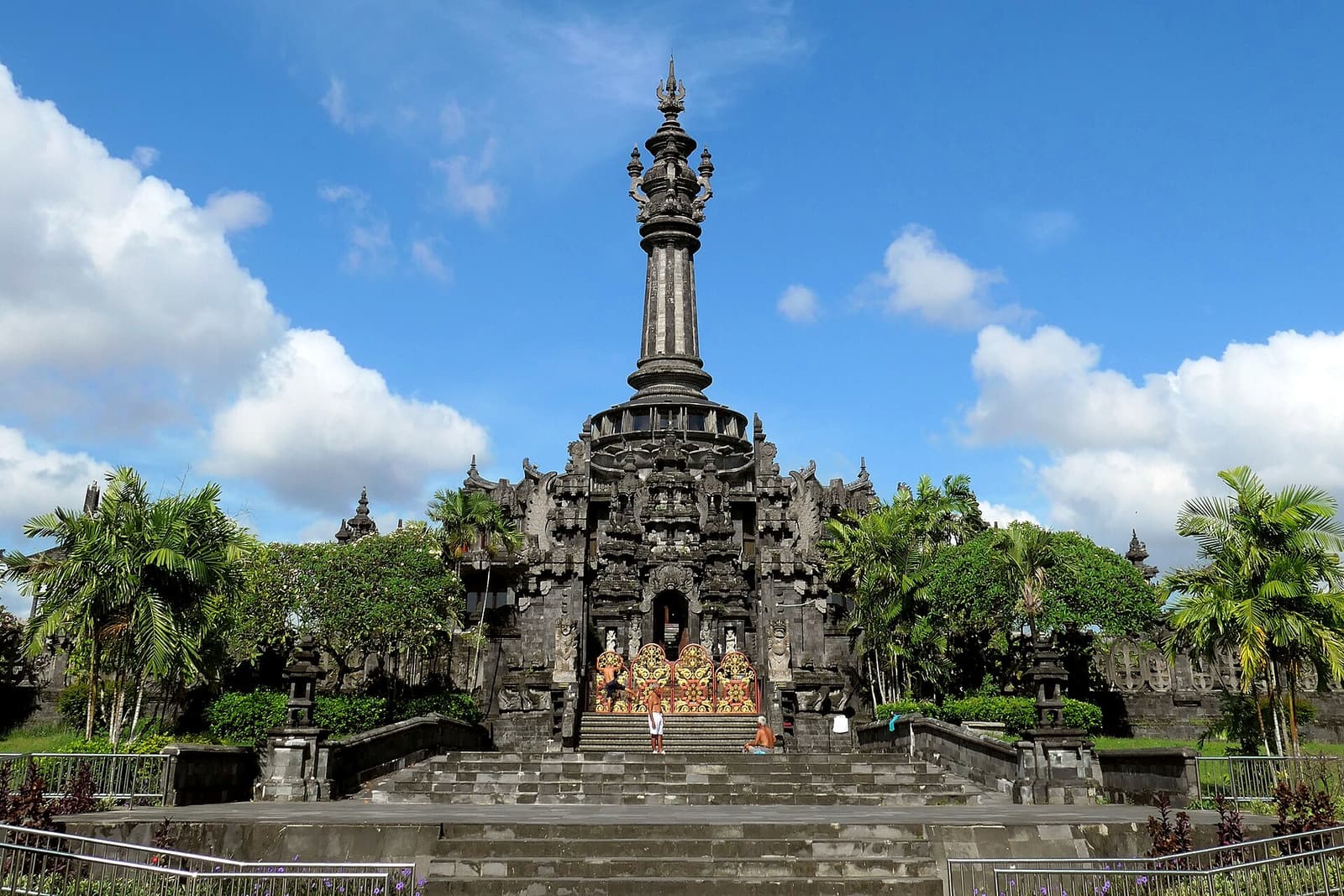
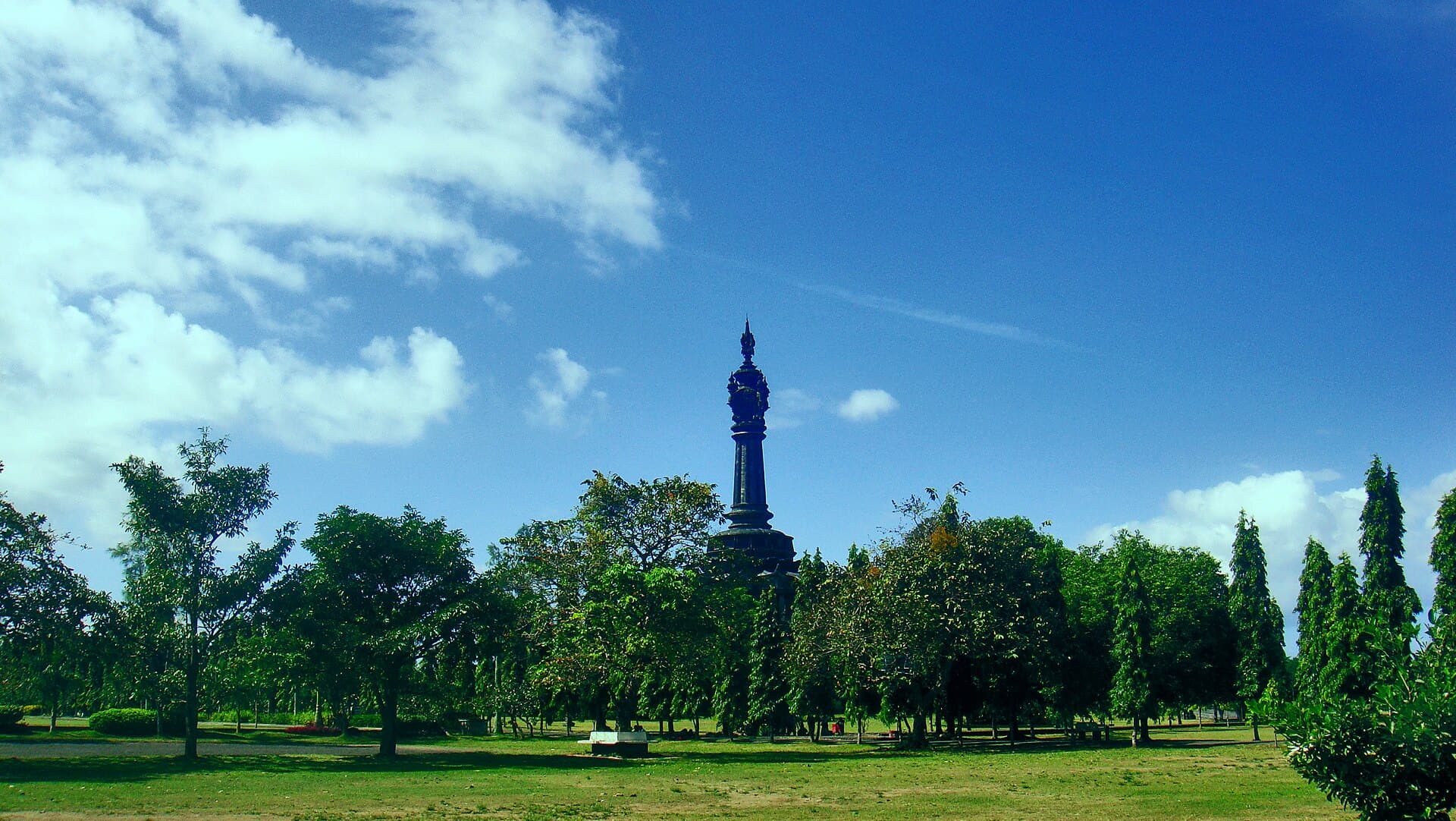
The Bajra Sandhi monument seen across the lawns of Renon, Denpasar

Things to do in Denpasar

Twelve places in the old town, Renon and along the coast — and how to fit them together.

Denpasar’s sights fall into three easy clusters. The old town around Puputan Square and the Badung River is walkable and holds the market, the museum and the oldest temples. Renon and the east have the big monument, the Art Centre and the best local eating. And the coast — Sanur and Serangan — gives you the sea.

None of these places is far from the next: fifteen to twenty minutes by taxi links any two clusters. A guided city tour covers the old town in half a day if you would rather not navigate.
Old town & the markets

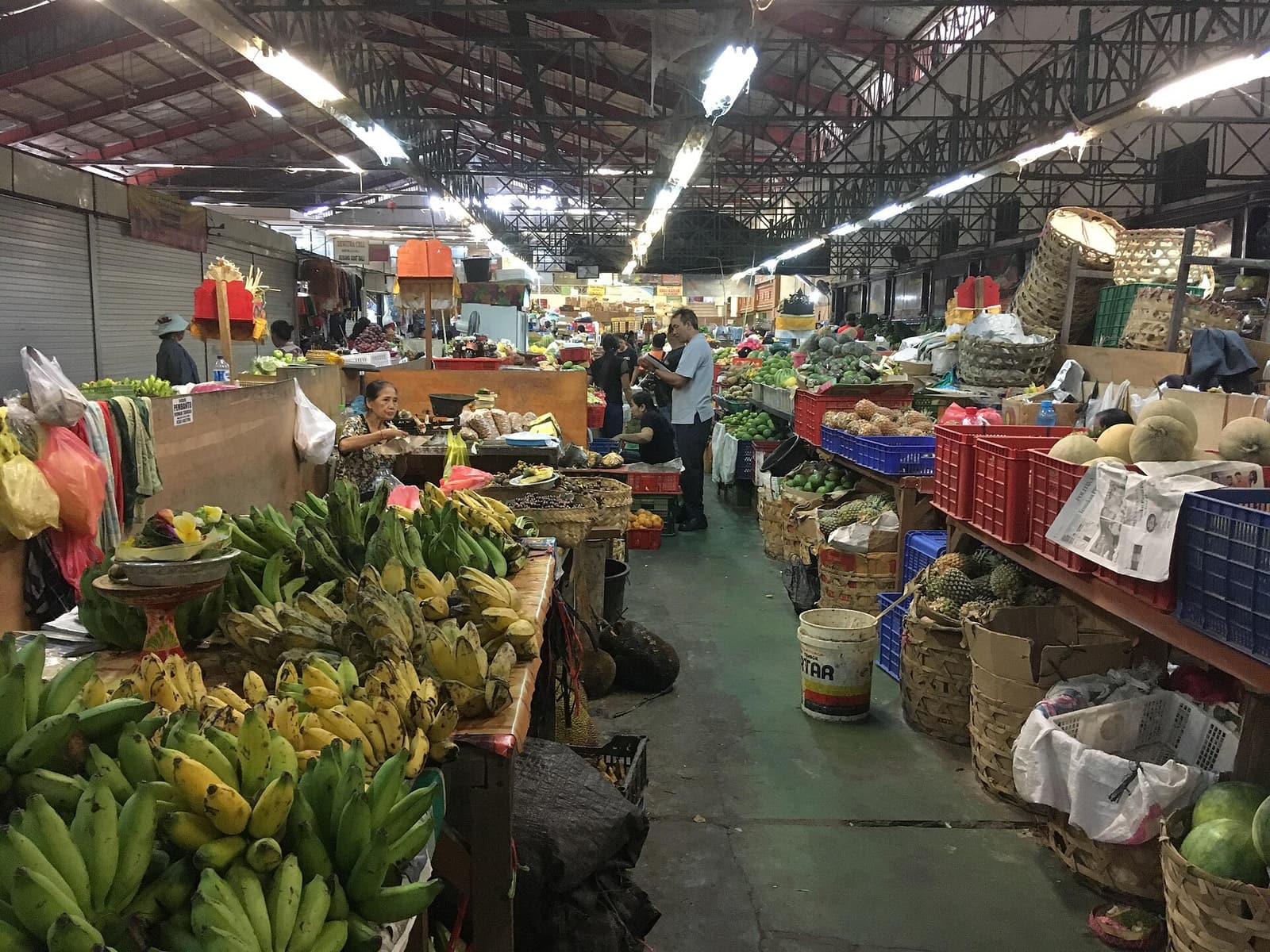
Fruit and vegetable stalls inside the rebuilt Badung Market hall in Denpasar Old town & the markets

Badung Market & Kumbasari

Bali’s biggest traditional market, on both banks of the river

Pasar Badung is where Denpasar shops: four floors of fruit, spices, offerings, meat, fish and ceremonial goods on the east bank of the Badung River, with the Kumbasari art market facing it across the water. It trades around the clock and is at its liveliest at dawn and again after dark.

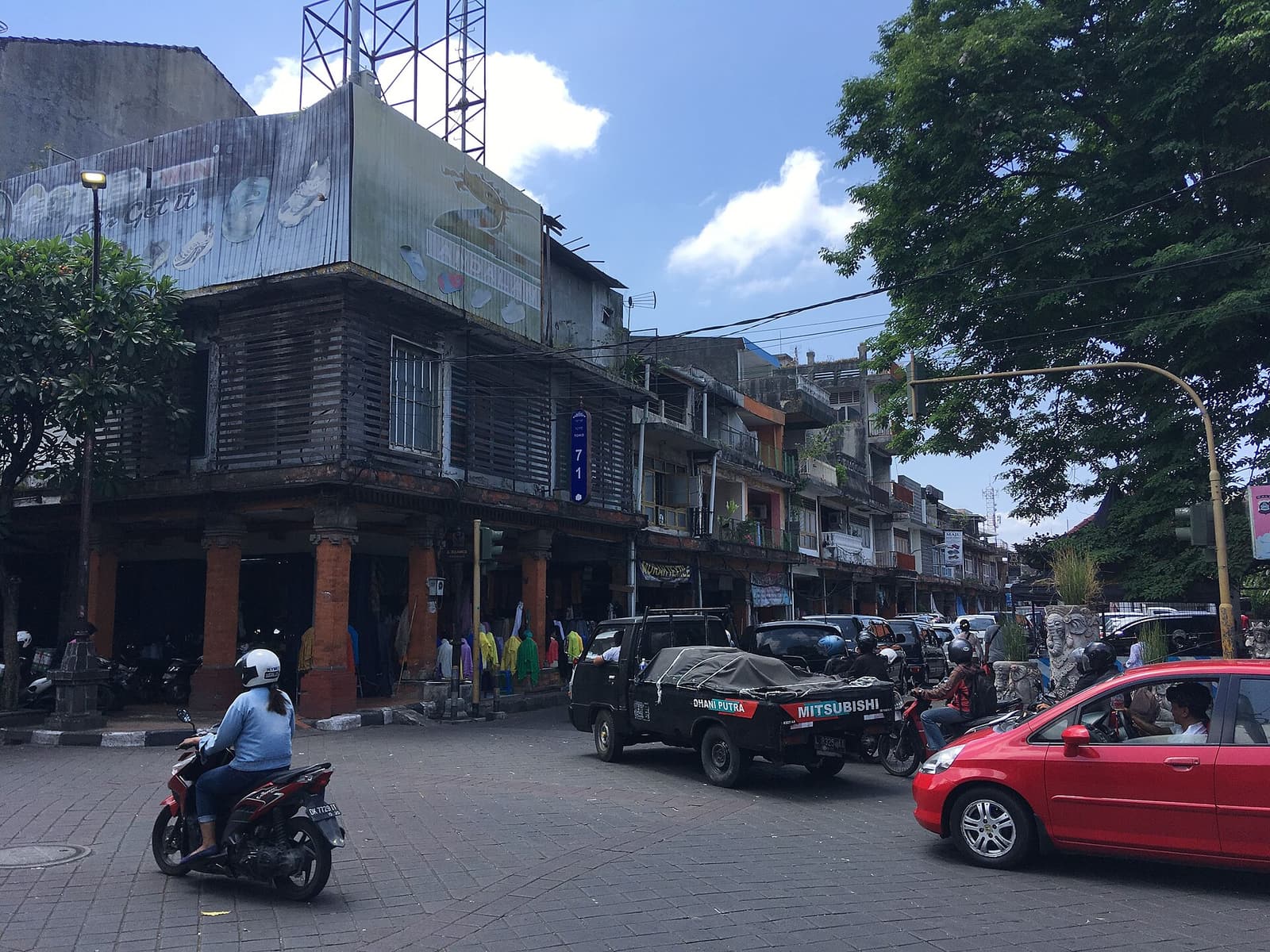
Old shophouses and traffic on Jalan Sulawesi in central Denpasar Old town & the markets

Jalan Gajah Mada & Jalan Sulawesi

The old trading streets: shophouses, coffee and cloth

Jalan Gajah Mada is Denpasar’s historic high street, lined with old Chinese shophouses, gold shops and a long-running coffee roaster. Jalan Sulawesi, running off it beside the market, is the city’s fabric street, where Balinese families buy the lace, brocade and batik for their temple clothes.

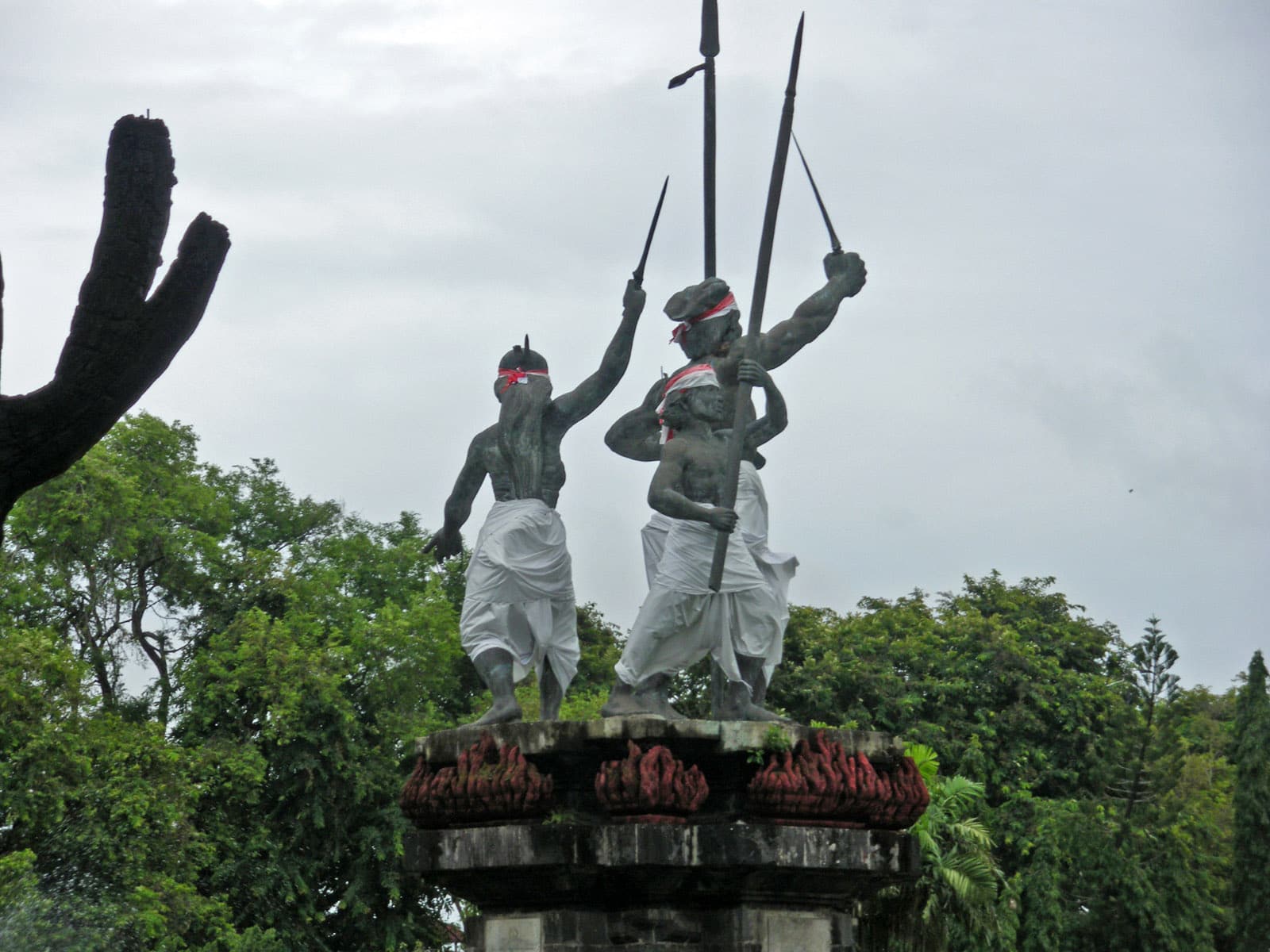
The bronze Puputan Badung monument of figures with raised weapons in Denpasar Old town & the markets

Puputan Badung Square

The green heart of the city, and the place it remembers 1906

A big, shady lawn in the middle of Denpasar where the court of Badung walked out to meet Dutch guns on 20 September 1906 in a ritual fight to the death — the puputan. Today families fly kites and eat snacks under the monument, with the Bali Museum and Pura Jagatnatha along its eastern side.

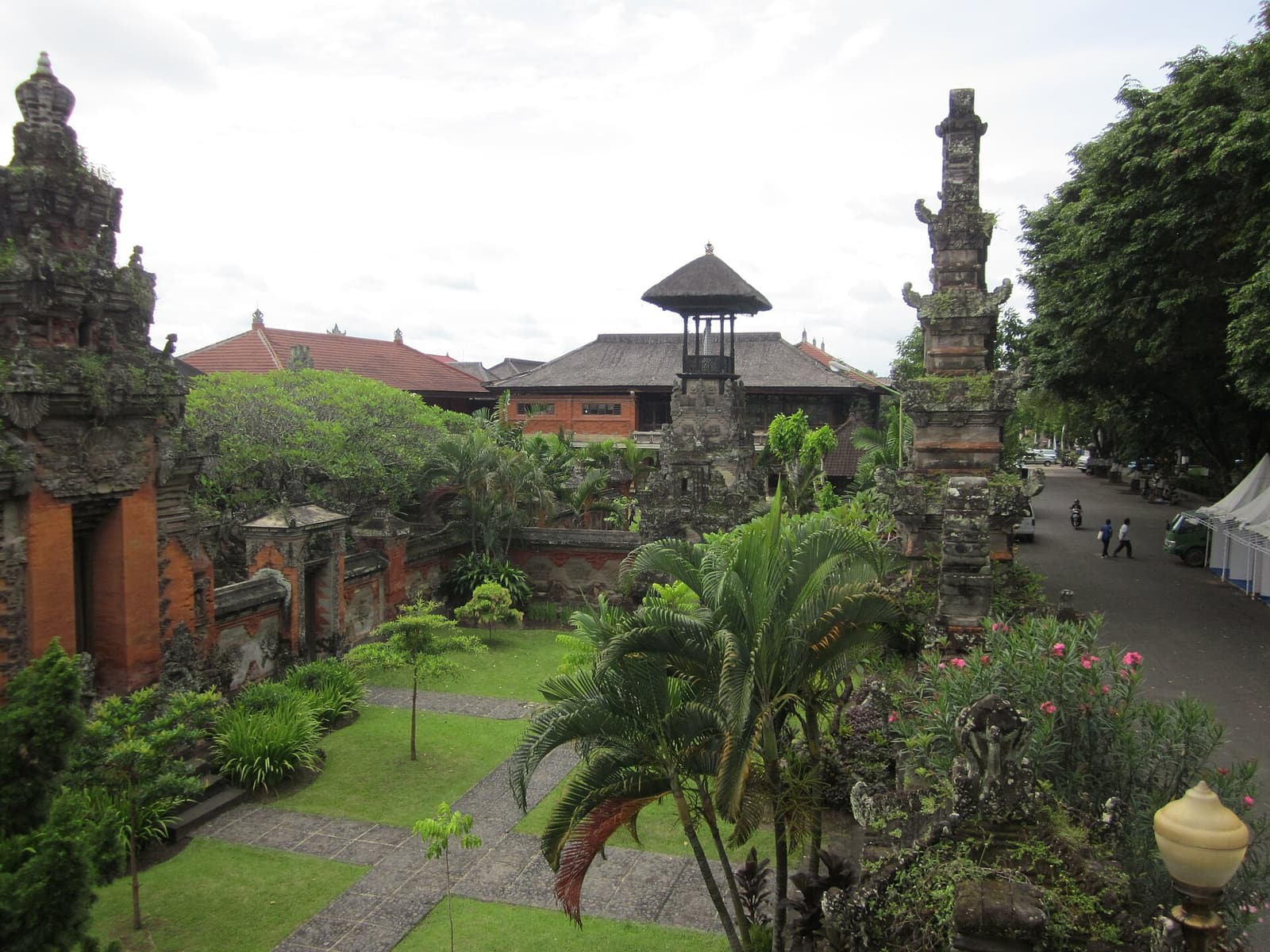
Gardens, carved gateways and the kulkul tower in the grounds of the Bali Museum, Denpasar Old town & the markets

Bali Museum

Palace-and-temple architecture with the island’s story inside

Bali’s oldest museum, opened in 1932 beside Puputan Square. Its pavilions are built in the palace styles of different Balinese kingdoms around gateways and courtyards, and hold prehistoric finds, ritual objects, masks, textiles and dance costumes. The architecture is as much the attraction as the collection.

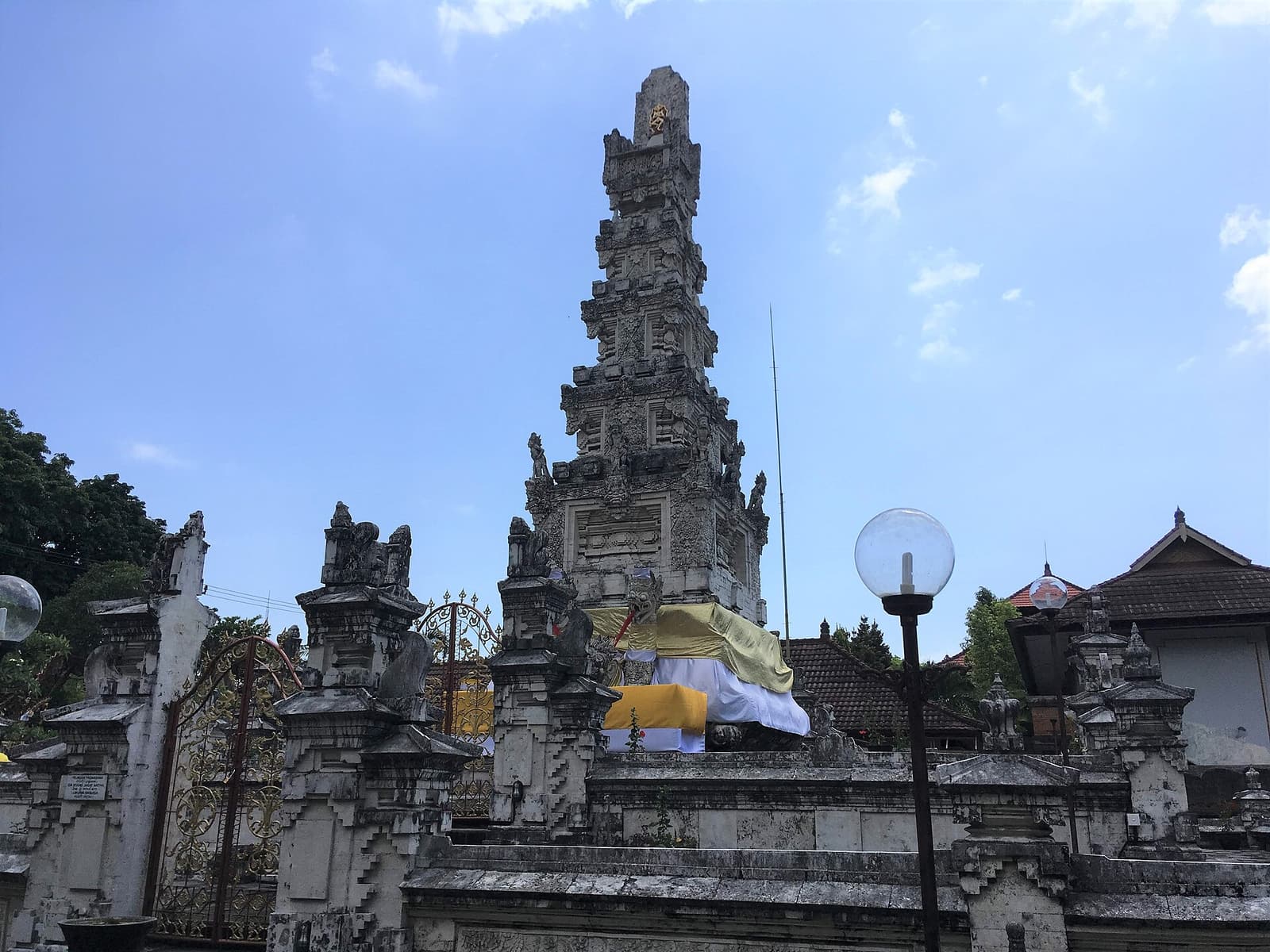
The tall white coral padmasana shrine of Pura Agung Jagatnatha in Denpasar Old town & the markets

Pura Agung Jagatnatha

Denpasar’s state temple, built of white coral

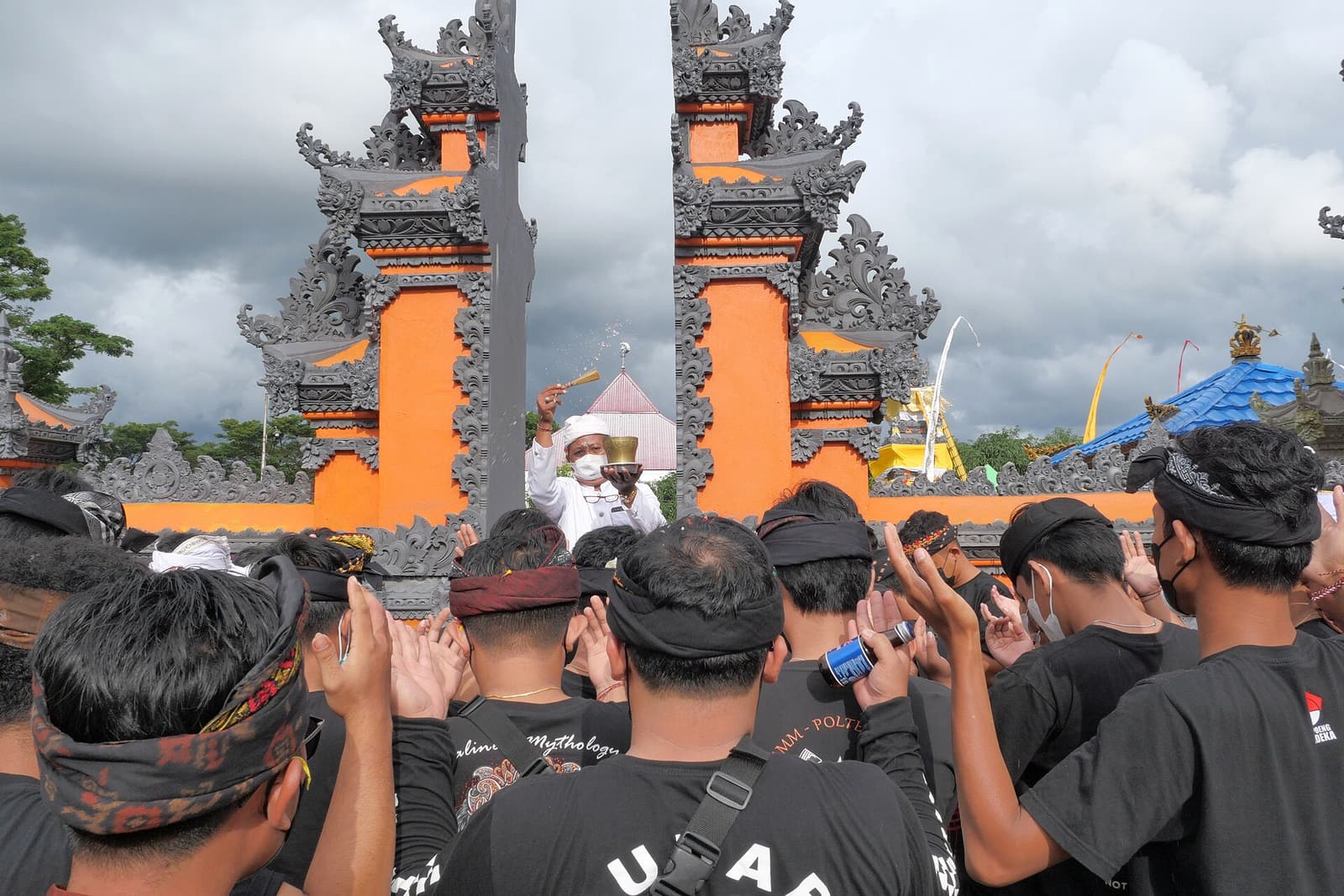
The city’s principal public temple stands between the Bali Museum and the square. Its centrepiece is a tall padmasana — an empty lotus throne of white coral for Sang Hyang Widhi Wasa, the supreme god — rising from a carved cosmic turtle and two serpents. It is busiest on full-moon and new-moon nights.

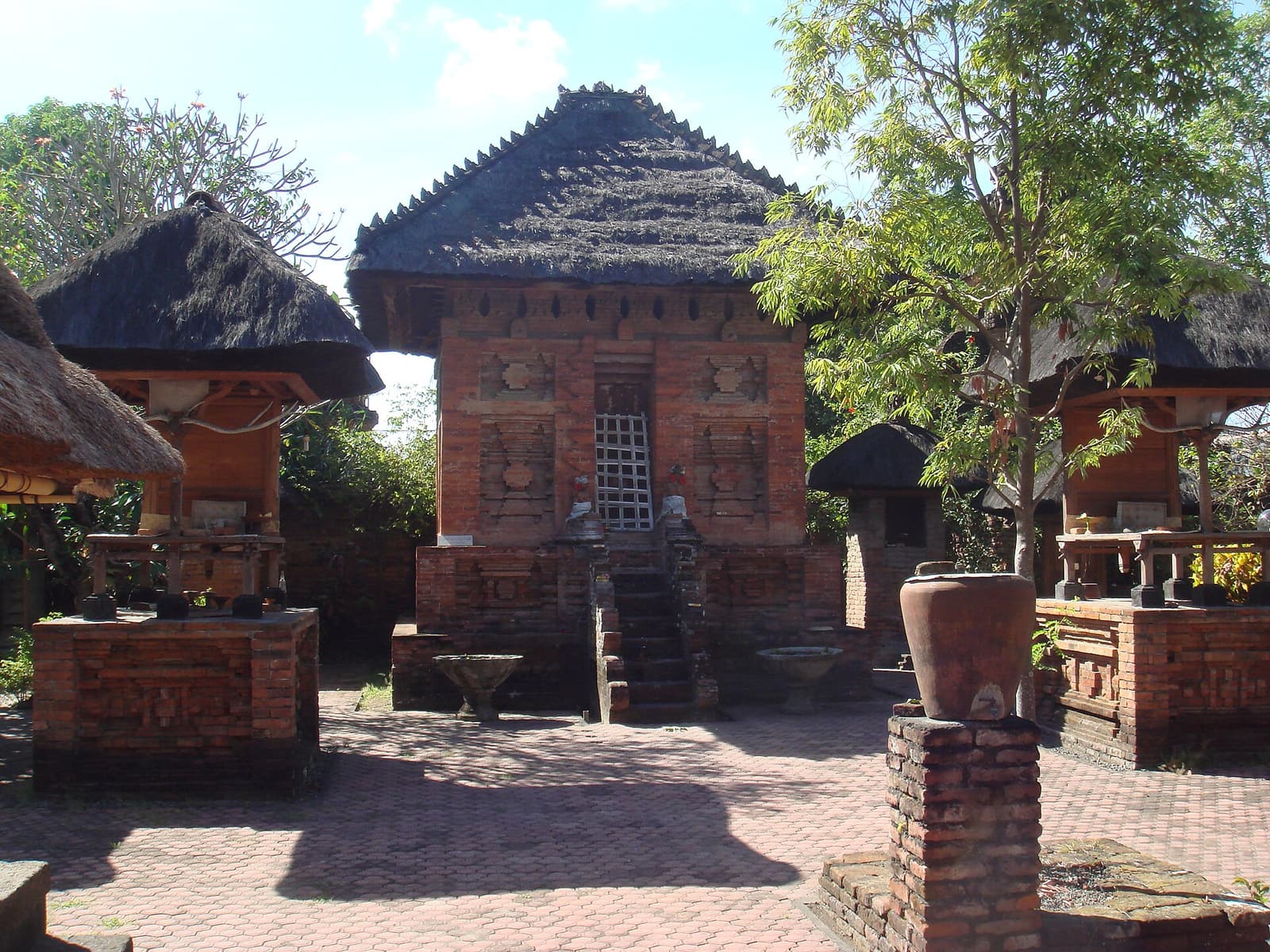
Red-brick shrines with thatched roofs in the courtyard of Pura Maospahit, Denpasar Old town & the markets

Pura Maospahit

Red brick from the age of Majapahit

One of the oldest temples in Denpasar, dating back to the 14th century and the time of Javanese Majapahit influence in Bali. Its plain red-brick gateways and shrines, guarded by large terracotta figures, look quite unlike the carved grey stone of later Balinese temples. It is small, quiet and sometimes locked.

Renon & east Denpasar

The stone tower of the Bajra Sandhi monument rising above its gardens in Renon, Denpasar Renon & east Denpasar

Bajra Sandhi Monument

The monument to the struggle of the Balinese people, in Renon

A huge stone monument shaped like a priest’s bell, standing in the middle of Renon’s Niti Mandala park. Inside, dioramas tell the story of Bali from prehistory to independence, and a spiral stair climbs to a gallery with views over the city. The lawns around it are Denpasar’s favourite jogging ground.

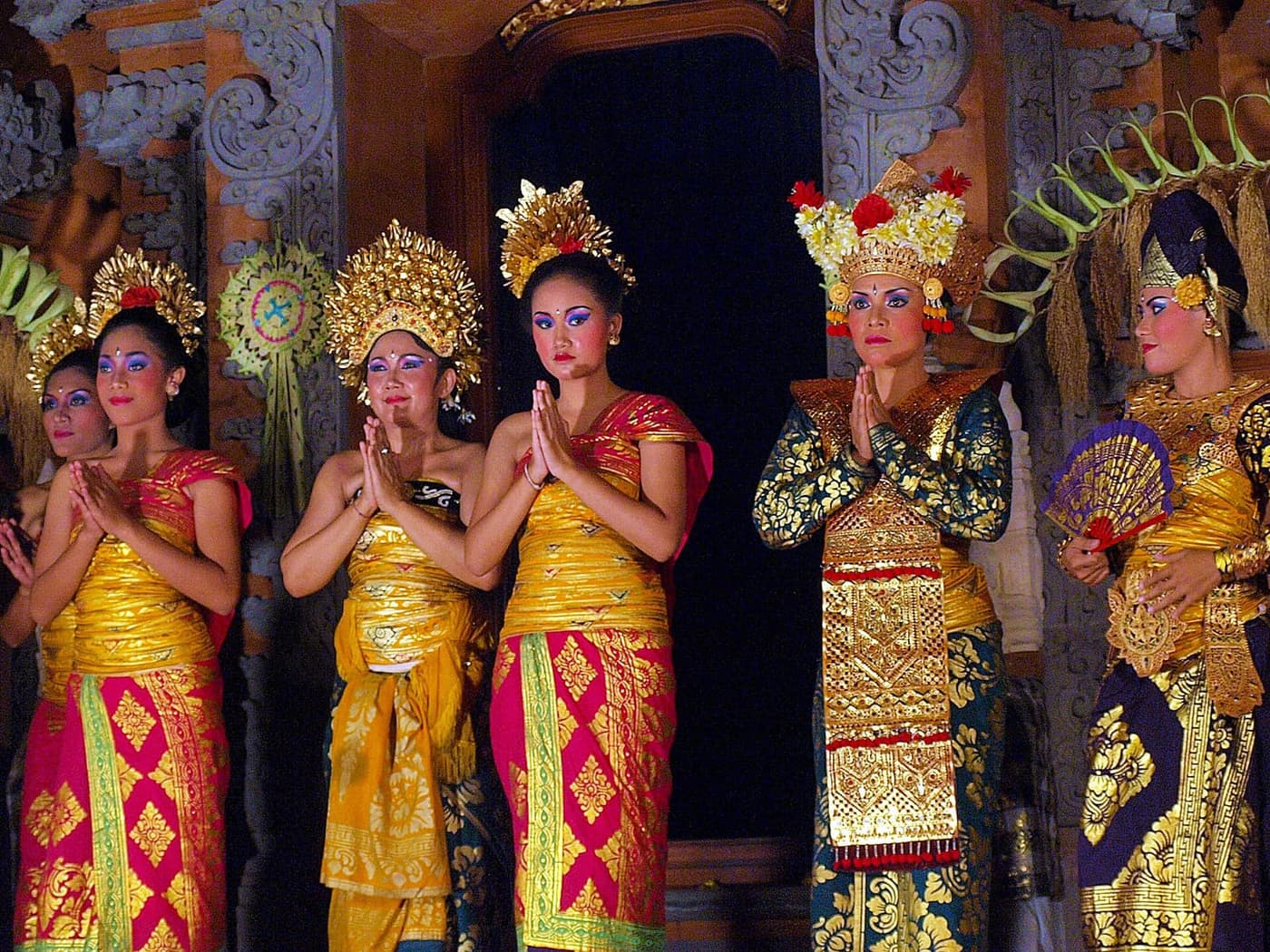
Young Balinese legong dancers in gold costumes and headdresses Renon & east Denpasar

Bali Art Centre (Taman Werdhi Budaya)

Home of the Bali Arts Festival

A complex of pavilions, galleries and stages in traditional Balinese style on Jalan Nusa Indah, opened in 1973. For most of the year it is a calm place to see Balinese painting and carving; from mid-June to mid-July it hosts the Bali Arts Festival, a month of dance, gamelan and theatre from every part of the island.

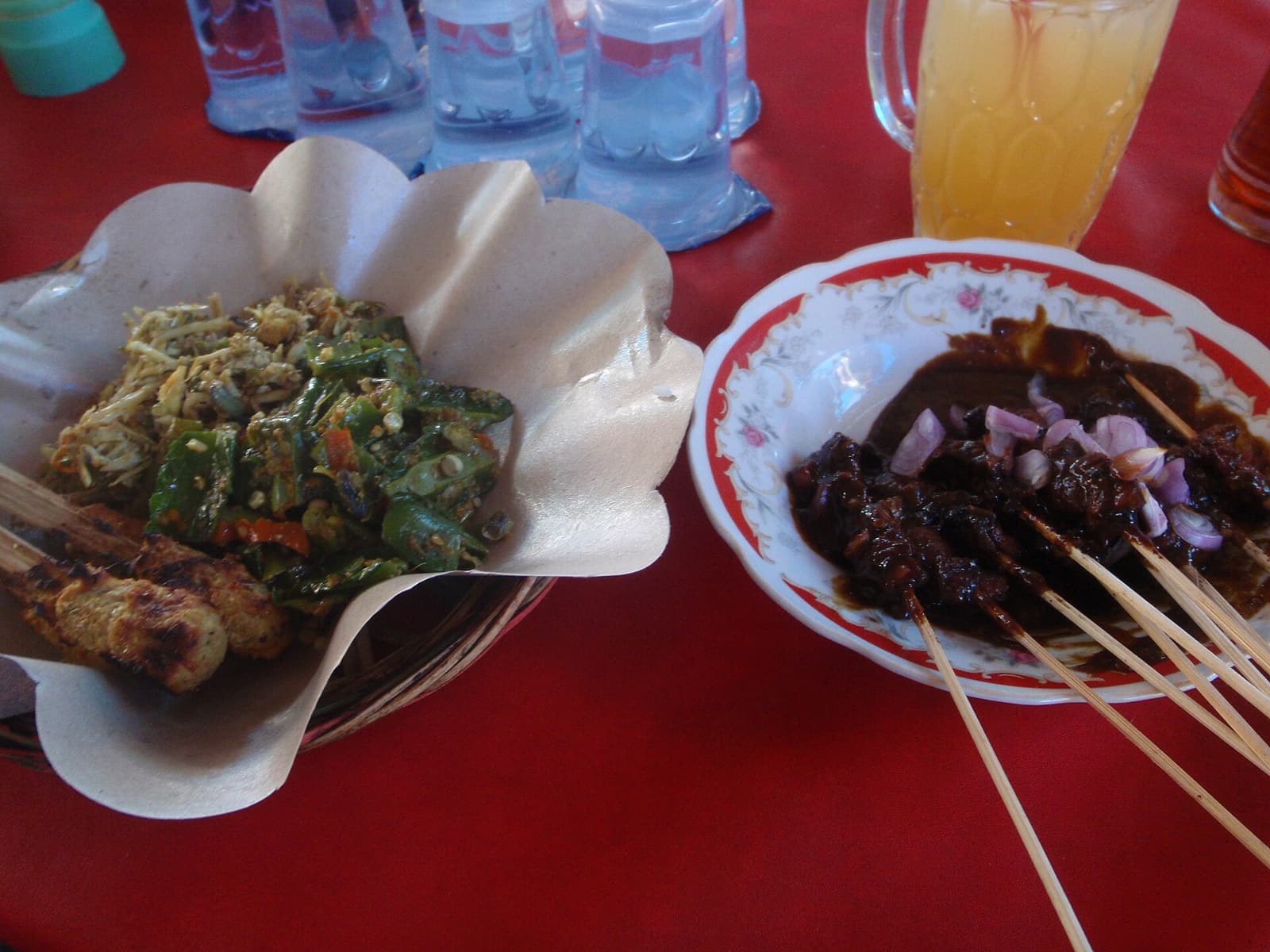
A plate of Balinese sate and lawar on a red table Renon & east Denpasar

Night Markets: Kreneng & Sindhu

Where Denpasar eats after dark

When the sun goes down, car parks and market yards turn into rows of food stalls. Pasar Kreneng, east of the centre, is the city’s biggest night market, full of Balinese and Javanese dishes at local prices; Pasar Sindhu in Sanur is smaller, easier and popular with visitors staying by the beach.

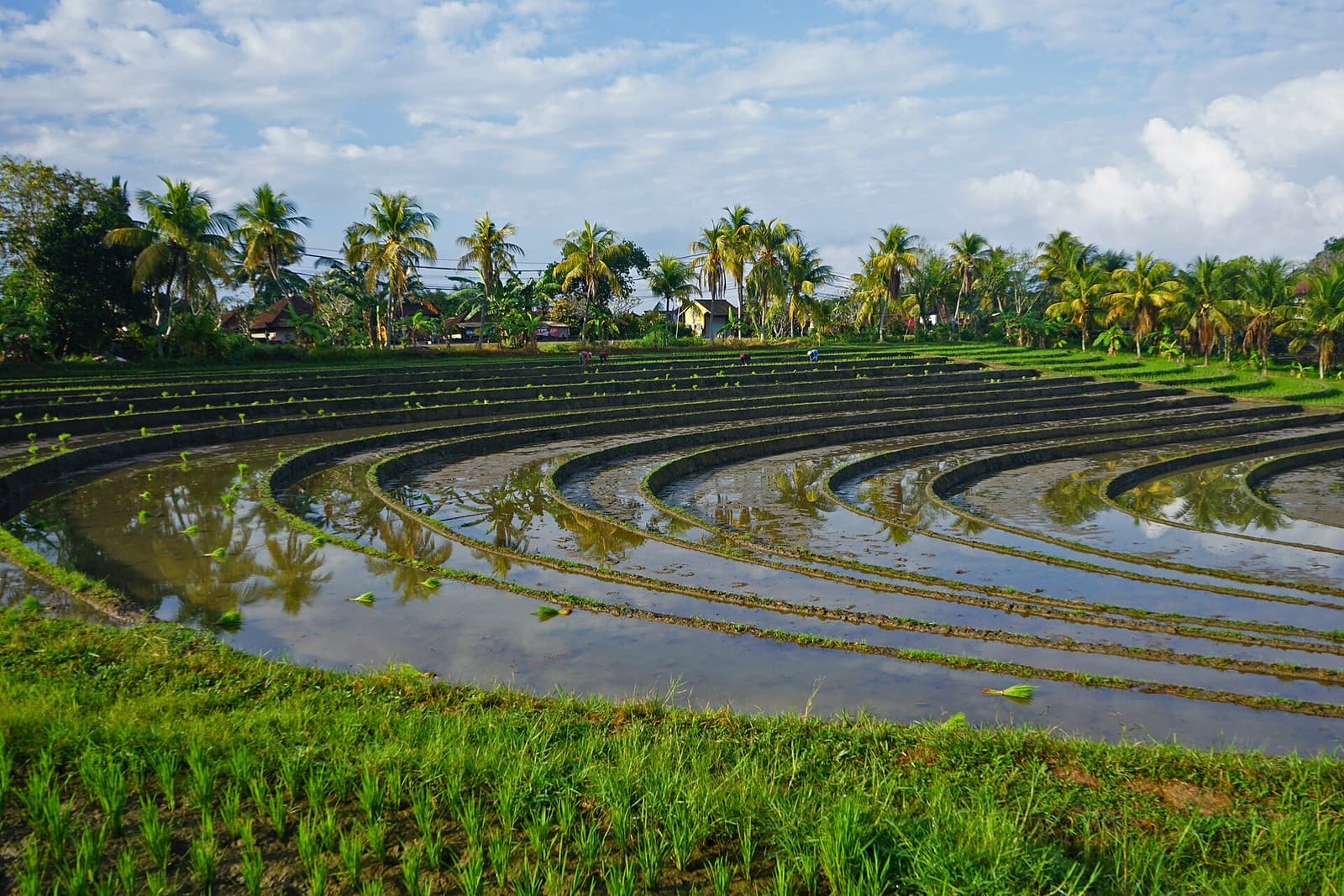
Flooded rice fields edged with coconut palms in Bali Renon & east Denpasar

Kertalangu Cultural Village

Rice fields and a jogging track inside the city limits

Desa Budaya Kertalangu, in Kesiman on Denpasar’s eastern edge, preserves a stretch of working rice fields with a walking and jogging path through them and the World Peace Gong at its entrance. It is a local weekend spot rather than a major sight — a breath of green between the old town and Sanur.

Sanur & Serangan

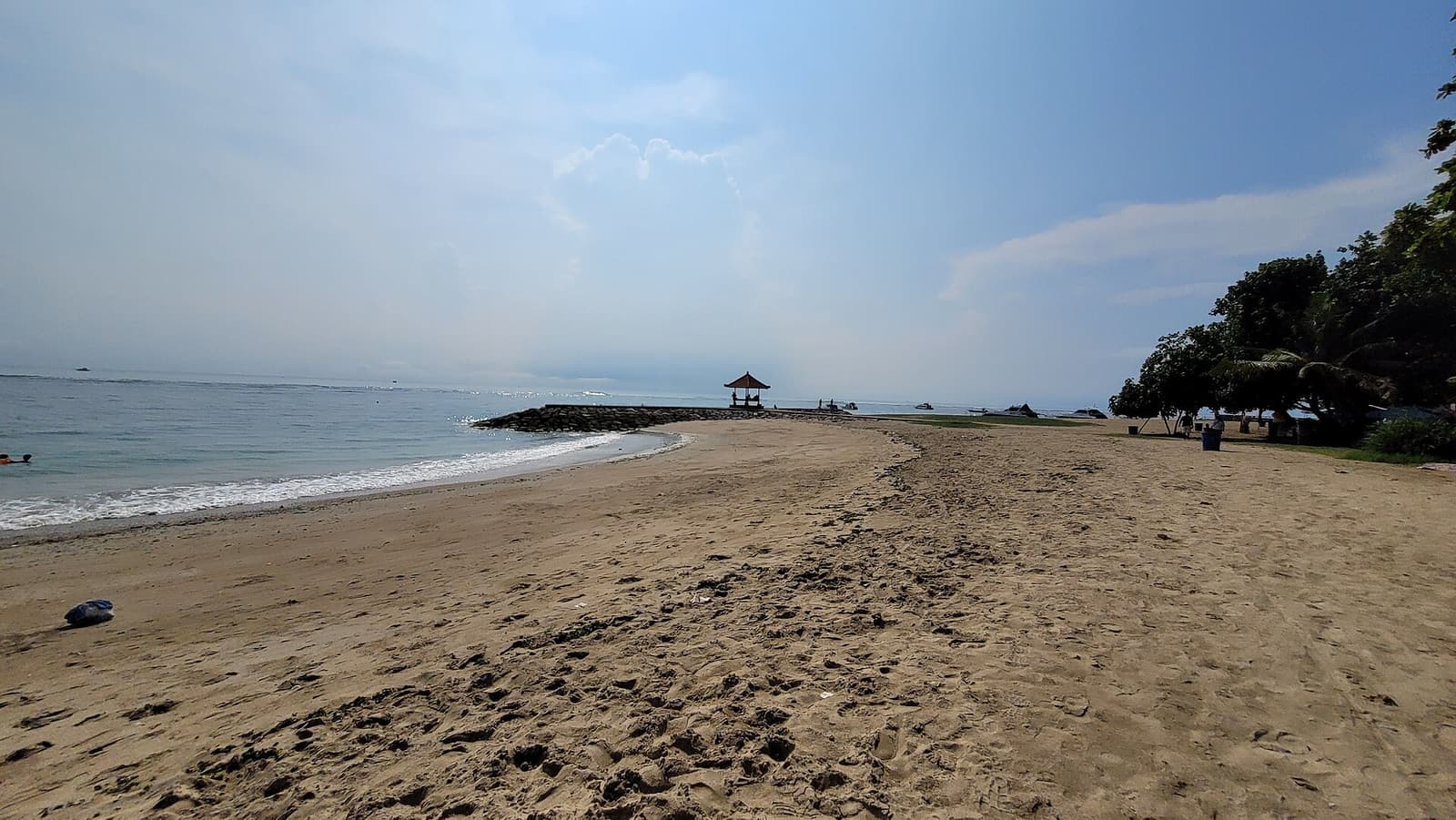
The sand and calm shallow water of Sanur beach in the morning Sanur & Serangan

Sanur Beach

Denpasar’s seaside: sunrise, a long beach path and the boats to the islands

Sanur is the city’s own beach district and Bali’s original resort. A reef keeps the lagoon calm, a paved path runs for kilometres along the shore past jukung boats and beach cafés, and the sun rises out of the sea beside Nusa Penida. The harbour at its northern end is where fast boats leave for Nusa Lembongan and Nusa Penida.

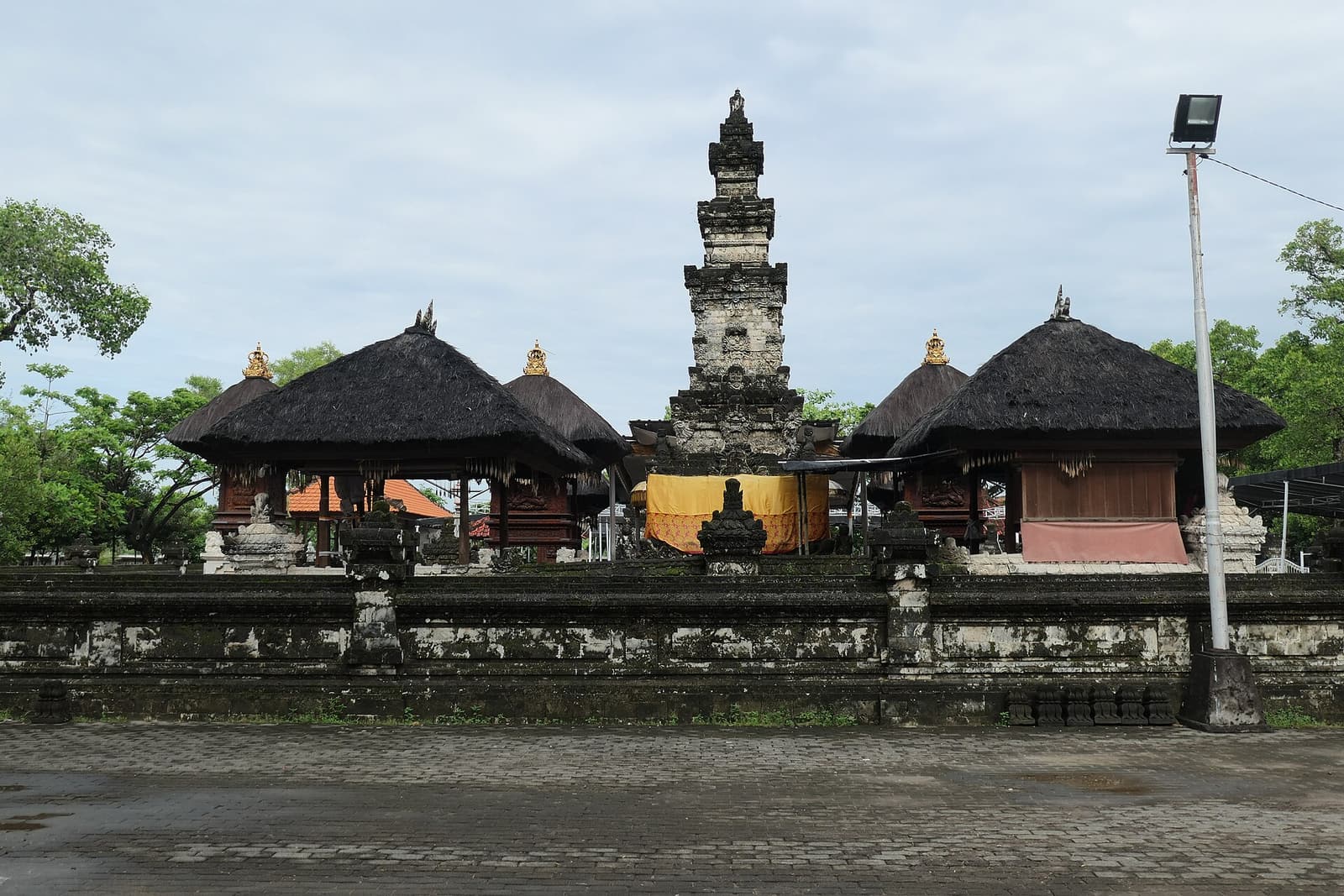
Thatched shrines and a stone tower inside Pura Sakenan on Serangan Island Sanur & Serangan

Serangan Island

Turtles, a sea temple and a harbour south of Sanur

Serangan — “Turtle Island” — is joined to Denpasar by a causeway. It is home to the Turtle Conservation and Education Centre, where injured turtles are cared for and hatchlings are raised for release, and to Pura Sakenan, an important sea temple that draws thousands of worshippers at Kuningan.

Putting it together

One day: Badung Market at 7 am → Jalan Sulawesi and Jalan Gajah Mada → Puputan Square, Pura Jagatnatha and the Bali Museum before lunch → Bajra Sandhi in the late afternoon → dinner at a night market.

Two days: add sunrise and the beach path at Sanur, the Le Mayeur Museum, and the turtle centre on Serangan.

For transport between them, see getting here and around; for what to eat on the way, the travel guide.

Plan your Denpasar days

Give Bali’s capital a day — it shows you the island without the filter

Eat your way through Badung Market, walk from Puputan Square to the Bali Museum, catch sunrise on Sanur’s beach path and use the city as your base for Ubud, Uluwatu and Nusa Penida. Compare the best-rated experiences and book in a couple of taps.