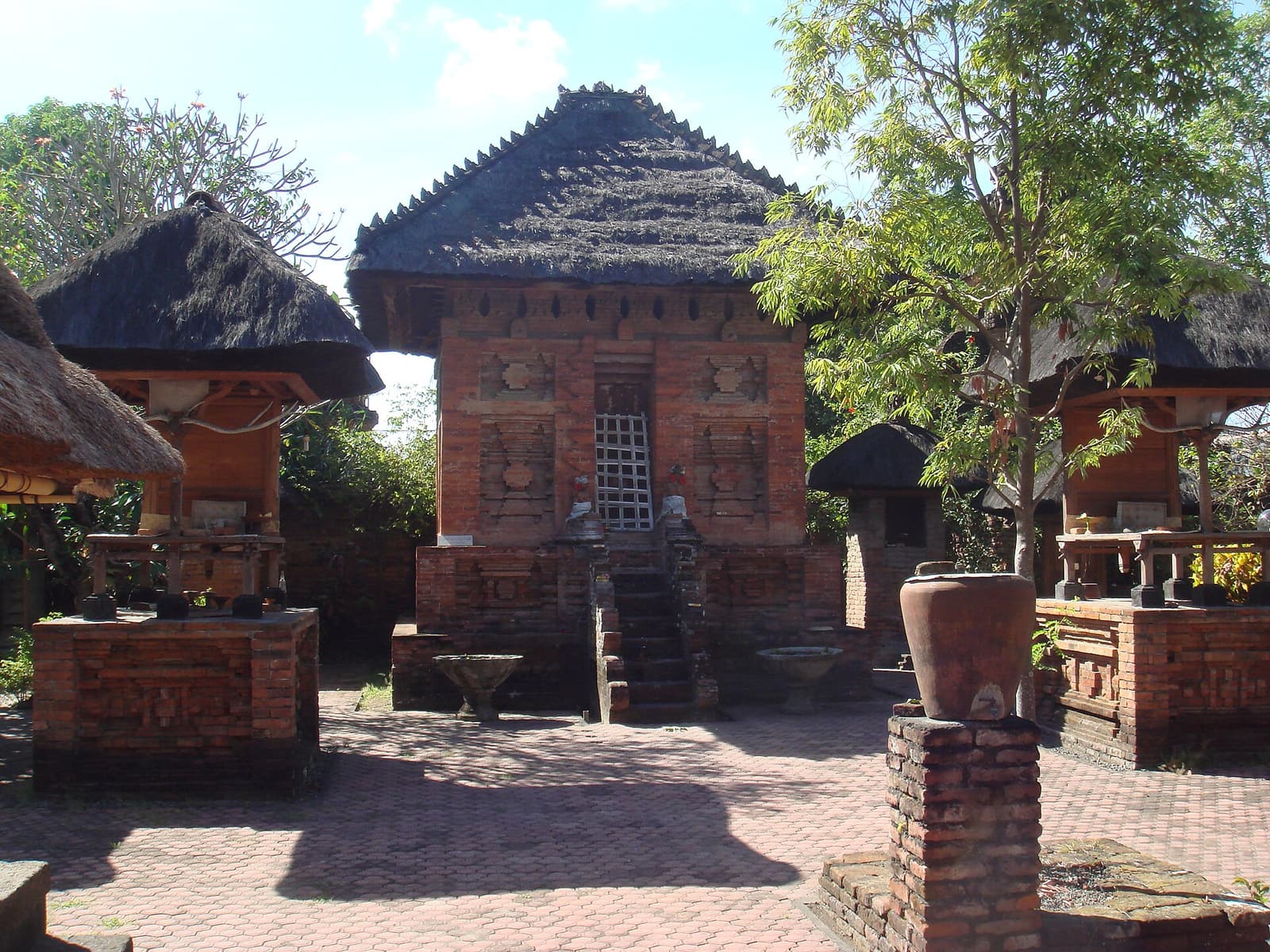
Pura Maospahit is a small temple on Jalan Sutomo, a short walk north-west of Badung Market, and one of the oldest in Denpasar. Its origins go back to the 14th century, when the Javanese empire of Majapahit extended its influence over Bali; the name itself is a form of “Majapahit”.
What makes it distinctive is the material. Instead of the soft grey volcanic stone carved into every surface of later Balinese temples, Maospahit is built of plain red brick, with clean lines and large terracotta figures guarding the gateways. Part of the complex was damaged in the great earthquake of 1917 and later restored.
Top things to do at Pura Maospahit
Look at the brickwork
The tall, narrow split gate and the shrine pavilions with their thatched roofs show the East Javanese style that Bali inherited from Majapahit. Compare it with the ornate stone of Pura Jagatnatha to see how Balinese architecture changed over the centuries.
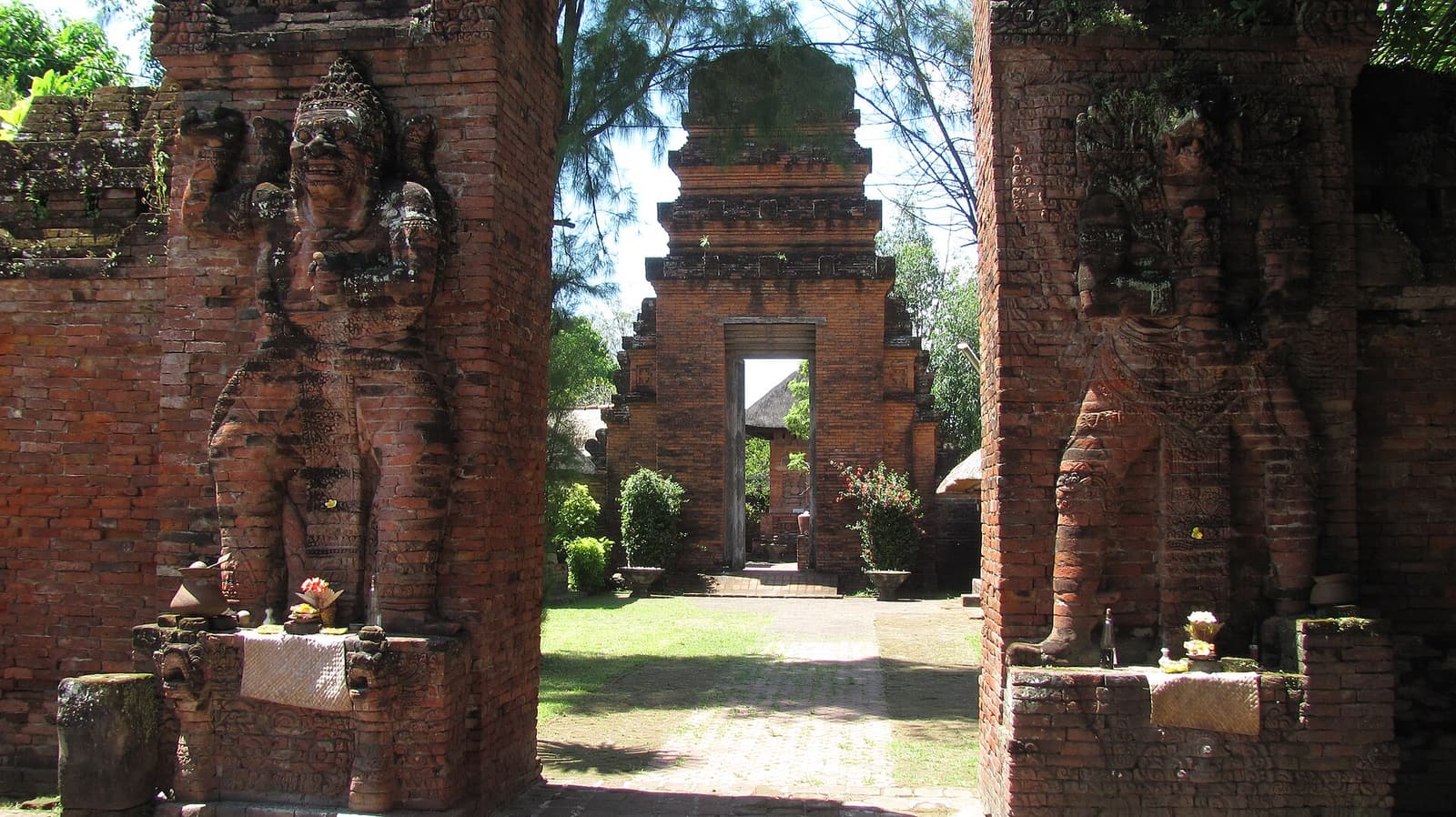
Find the guardian figures
Large relief figures flank the gateways, among them Garuda and the wind god Bayu. They are worn, but still among the most characterful sculptures in the city.
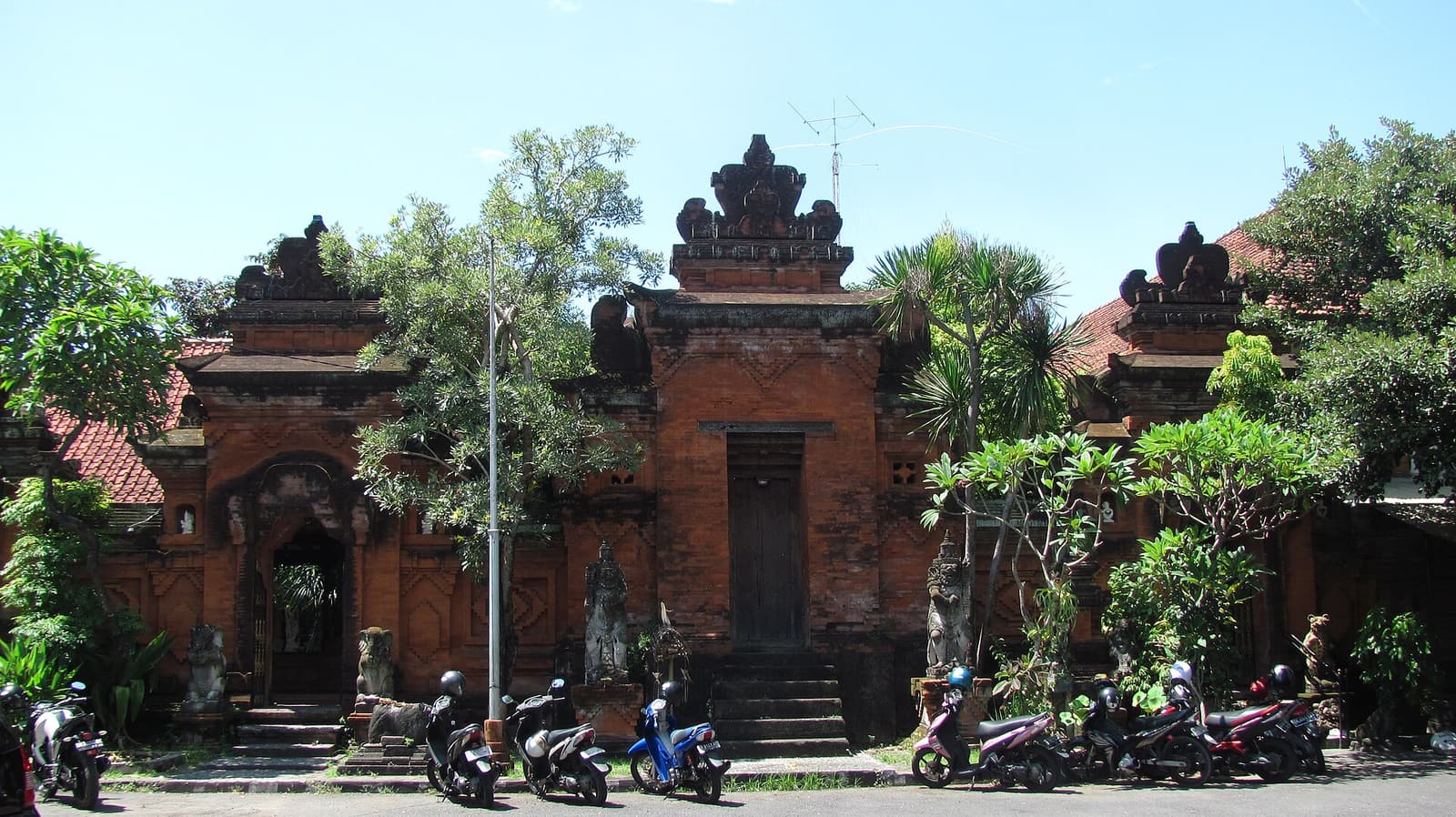
Add a palace gate
A few minutes away on Jalan Thamrin is Puri Pemecutan, a palace of one of Denpasar’s royal houses, rebuilt after 1906. It is a private residence, but its brick gateway on the street is worth a look as you pass.
How to get to Pura Maospahit
- Location: Jalan Sutomo, about 500 metres north-west of Badung Market.
- On foot: 5–10 minutes from the market, 15–20 minutes from Puputan Square.
- By car: the street is narrow with little parking; walk from the market if you can.
Insider tips
- The temple is often locked outside ceremonies. Try the small side entrance in the lane beside it, or ask politely nearby; if it stays closed, the gateways can still be seen from outside.
- Wear a sarong and sash if you go in.
- It is a neighbourhood temple with no ticket office; leave a small donation if someone opens it for you.
- Fifteen to twenty minutes is enough.
Best tours & tickets for Pura Maospahit
These well-reviewed experiences are the easiest way to see Pura Maospahit:
 Food & market walk from €40
Bali Heritage & Street Food Tour in Denpasar Badung Market
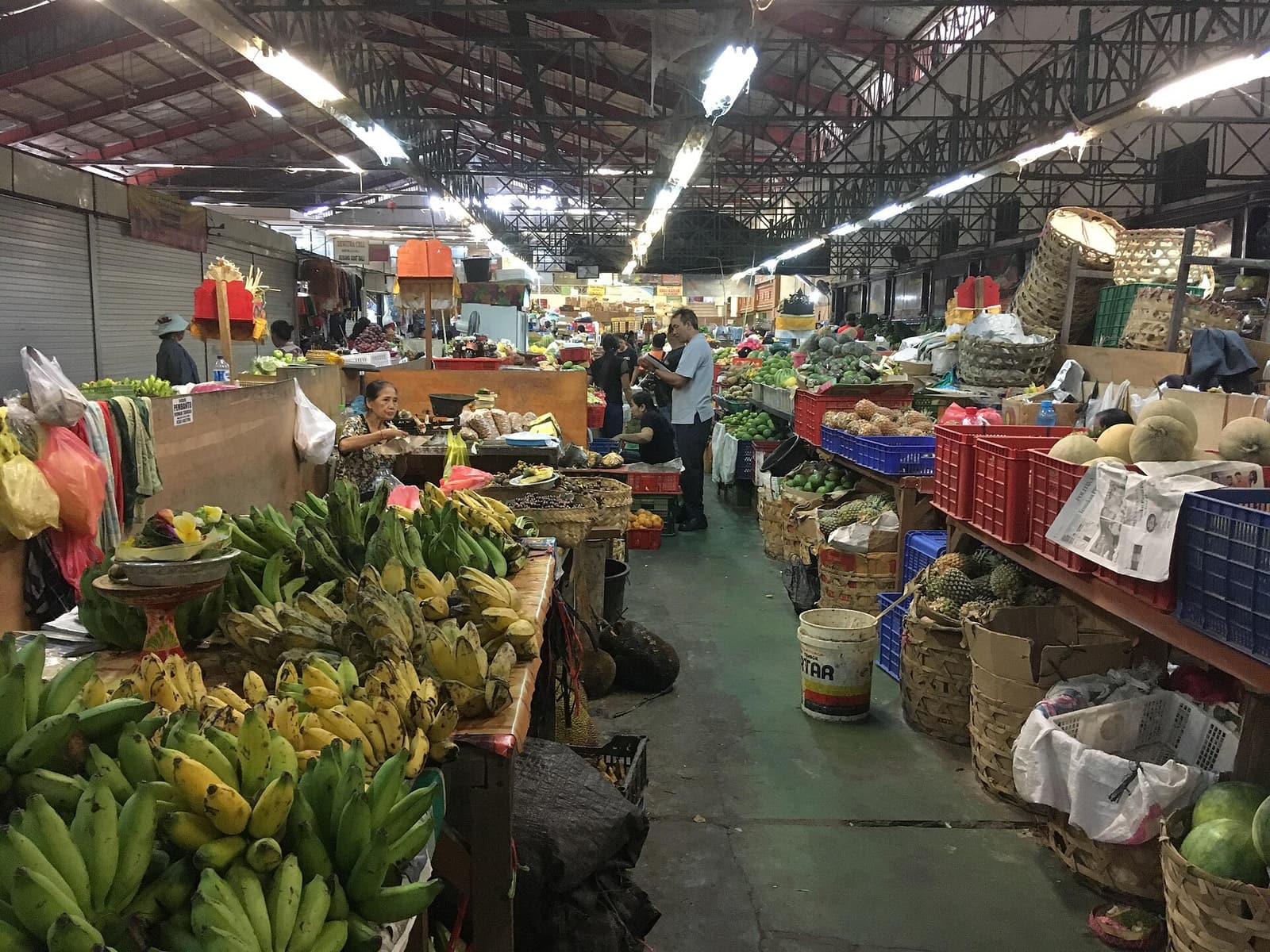
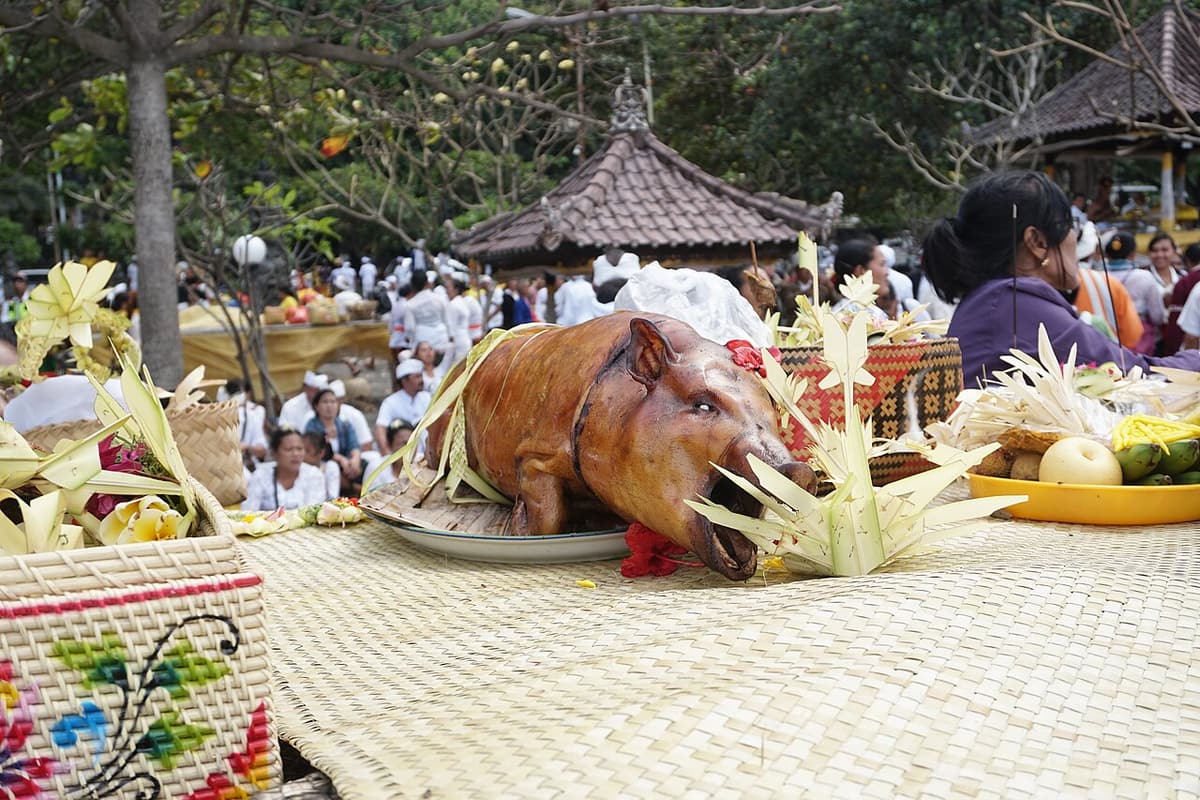
The most-reviewed tour that actually takes place inside Denpasar. A local guide leads you through the stalls of Badung Market and the old trading streets next to it, stopping to taste the things the city eats every day and explaining what you are looking at.
- Guided walk through Badung Market, Bali’s biggest traditional market
- Tastings of Balinese dishes such as babi guling and jaje Bali sweets
- Heritage streets around the market with a local guide
 City tour from €26
Bali: Denpasar City & Museum Highlight Tour with Ticket
A full-day sweep of Denpasar’s main sights with entrance tickets included. It is a newer listing with only a handful of reviews so far, but it is the one tour that links the old centre with Bajra Sandhi in a single day.
- Bali Museum, Pura Jagatnatha and Puputan Square
- The Bajra Sandhi monument in Renon
- Entrance tickets included
 City tour from €46
Denpasar: Museum, Traditional Market and Food Tasting Tour
A half-day introduction to the old centre: the square where the 1906 puputan is commemorated, the Bali Museum’s palace-style pavilions and the market on the Badung River, with food stops between them. A good choice if you want history and food in one booking.
- Starts at Puputan Square in the city centre
- Visit to the Bali Museum and Kumbasari Market
- Local food tastings along the way