Denpasar is warm all year — daytime temperatures of around 30–32°C and nights in the mid-20s — with two seasons. The dry season runs roughly from April to October, with blue skies, lower humidity and a sea breeze in Sanur. The wet season, November to March, brings heavy but usually short downpours, high humidity and greener landscapes.
For sightseeing in the city, the best overall months are May, June and September: dry, a little cooler and outside the peak crowds of July, August and the Christmas–New Year period. But Denpasar has two events worth planning a whole trip around — the ogoh-ogoh parade before Nyepi and the Bali Arts Festival.
Month by month
| Months | Weather | Crowds & prices | What is on |
|---|---|---|---|
| January–February | Wettest months; hot and humid, heavy showers | Low after the New Year peak | Quiet; lush countryside; rough seas at times |
| March | Still wet, easing late in the month | Low to moderate | Nyepi and the ogoh-ogoh parade (usually March) |
| April–May | Start of the dry season; clear and warm | Moderate; good value | Excellent sightseeing weather |
| June | Dry, slightly cooler, breezy | Rising | Bali Arts Festival opens mid-June |
| July–August | Driest and coolest; windy on the coast | Peak season; book ahead | Arts Festival to mid-July; kite season in Sanur; Sanur Village Festival |
| September–October | Dry and warm, humidity building | Moderate | Calm seas; fewer crowds |
| November | Rains begin | Low | Good value |
| December | Wet season; showers most days | High over Christmas and New Year | Festive period |
Nyepi and the ogoh-ogoh parade
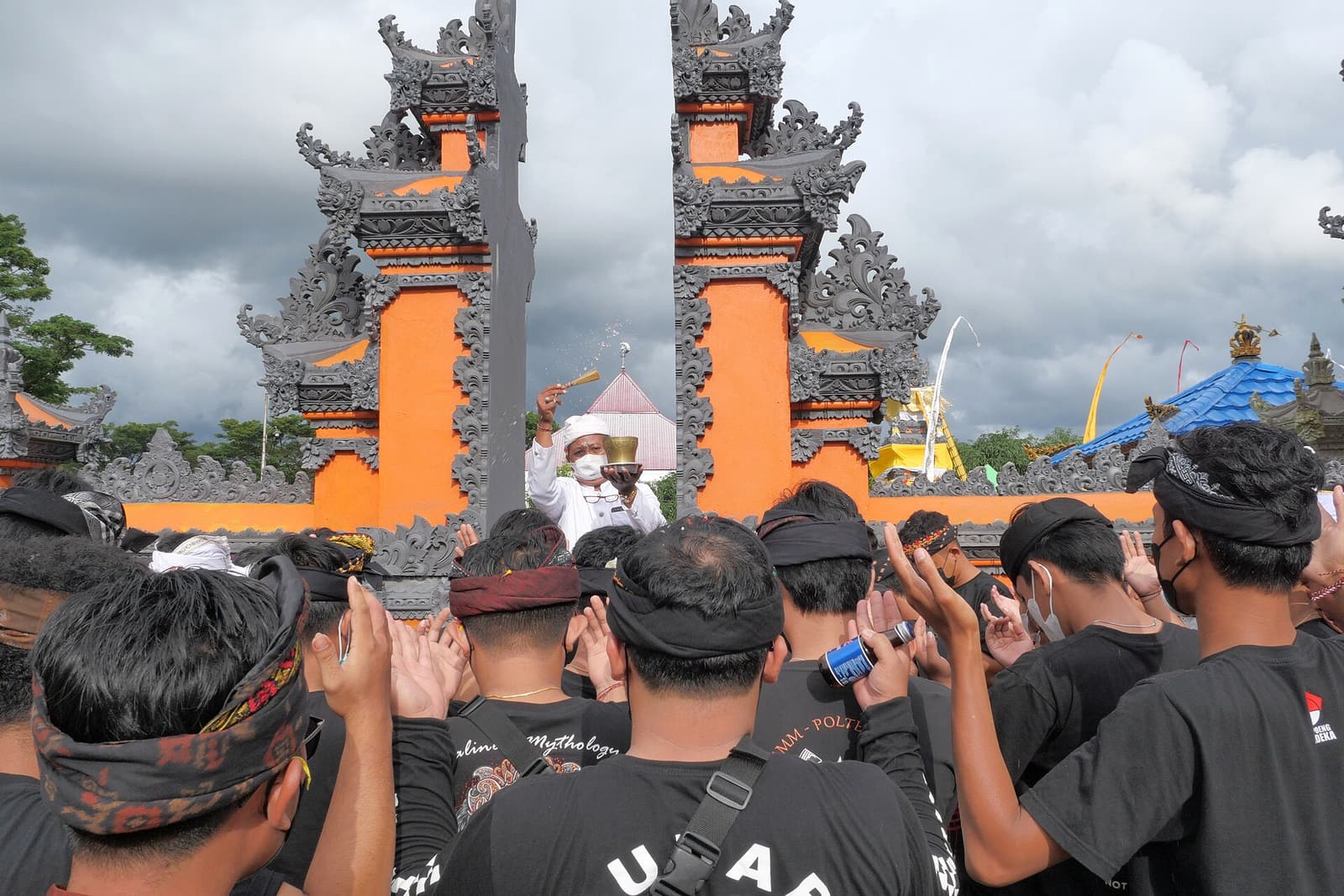
Nyepi is the Balinese New Year in the Saka calendar, and it is a day of total silence. For 24 hours, from 6 am to 6 am, nobody on the island works, travels, lights a fire or switches on a light. The airport closes. Streets are empty except for the pecalang, the village guards. Visitors must stay inside their hotel grounds, where staff provide meals and lighting is kept low. It usually falls in March; in 2027 it is expected on 8 March — confirm the date before you book.
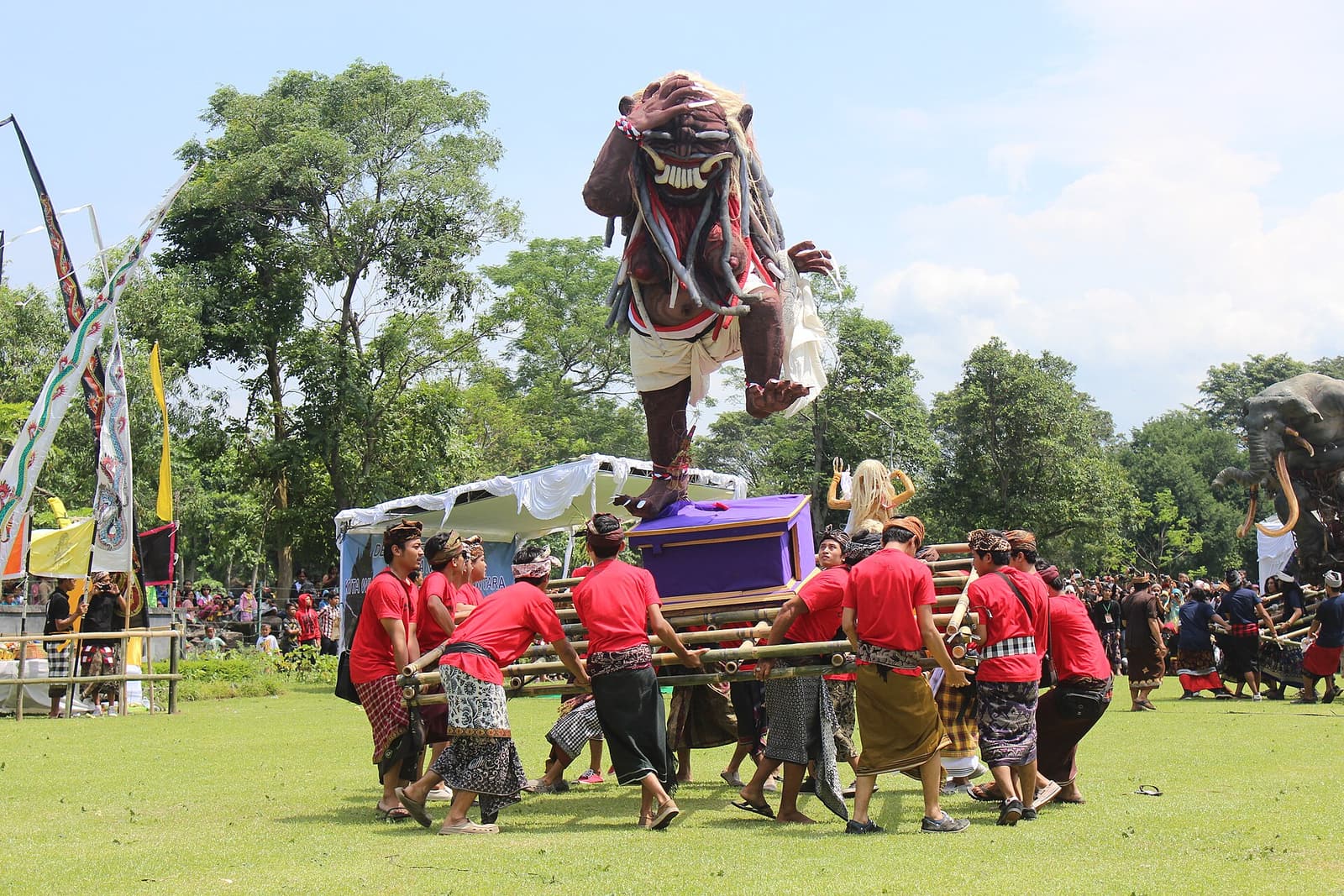
The night before, Pengerupukan, is the opposite: the noisiest night of the year. Every neighbourhood youth group has spent weeks building an ogoh-ogoh, a huge demon effigy of bamboo, foam and paper, and at dusk they are carried through the streets on bamboo platforms to the crash of gamelan, spun at crossroads to confuse evil spirits. Denpasar is the best place in Bali to see it. The city’s banjar compete to build the most spectacular figures, and the largest parade converges on the Catur Muka crossroads at Puputan Square.
- In the days before, walk around any neighbourhood to see the ogoh-ogoh being finished outside the community halls.
- On the eve, roads in the centre close from the afternoon. Arrive early, on foot, and expect dense crowds.
- Two or three days before Nyepi, Melasti processions carry temple effigies to the sea for purification — Sanur’s beaches are a good place to watch.
- Do not book a flight on Nyepi itself, and be at your hotel before the evening of the eve: transport stops early.
- Mobile data and some television are restricted on Nyepi. Hotel Wi-Fi usually works.
- The night sky on Nyepi, with the whole island dark, is extraordinary.
Bali Arts Festival (Pesta Kesenian Bali)
From about the middle of June to the middle of July, the Art Centre in Denpasar hosts a month of performances by troupes from every regency of Bali: classical and new dance, gamelan orchestras, shadow puppets, drama and competitions, on several stages every day until late evening. Most events are free. The festival opens with a long costumed parade in Renon, in front of the Bajra Sandhi monument. Dates are set each year; check before you plan around the opening.
Galungan and Kuningan
Galungan celebrates the victory of dharma (order) over adharma (disorder), and the return of ancestral spirits to their family homes. It comes every 210 days, so roughly twice in most years, on a Wednesday. In the days before, every household erects a penjor — a tall, arching bamboo pole hung with palm-leaf decorations — and Denpasar’s streets become tunnels of them. Kuningan, ten days later, marks the spirits’ departure; it is the day of the big festival at Pura Sakenan on Serangan.
These are family holidays: many shops, warungs and offices close for a day or two, and the roads are busy with people travelling to their home villages, but hotels and tourist services run normally. It is a wonderful time to be in the city.
Other dates to know
- Full moon (purnama) and new moon (tilem): temple ceremonies across the city, notably at Pura Jagatnatha.
- July–August: kite season on Sanur’s beaches, and usually the Sanur Village Festival of food, music and culture.
- 17 August: Indonesian Independence Day, with flags, ceremonies and games in every neighbourhood.
- 20 September: commemoration of the Puputan Badung at the square.
- December: the Denpasar Festival, a year-end celebration of the city’s food, crafts and performing arts around the centre, in most years.
- Eid al-Fitr (Lebaran): a nationwide holiday period when domestic tourism to Bali peaks and transport is busy.
Sea conditions and boats
If your plans include a fast boat from Sanur, note that the crossing to the Nusa islands is choppiest in the windy middle of the dry season (roughly July and August) and during wet-season storms, when departures are occasionally cancelled. The calmest water is usually in the shoulder months.